


This page archives materials and outcomes from the Carbon & Culture Symposium hosted in 2025 by CTUIR in partnership with Oregon Dept of Environmental Quality (ODEQ)
Thank you to everyone who made our Symposium an amazing success, we could not have done it without you!!
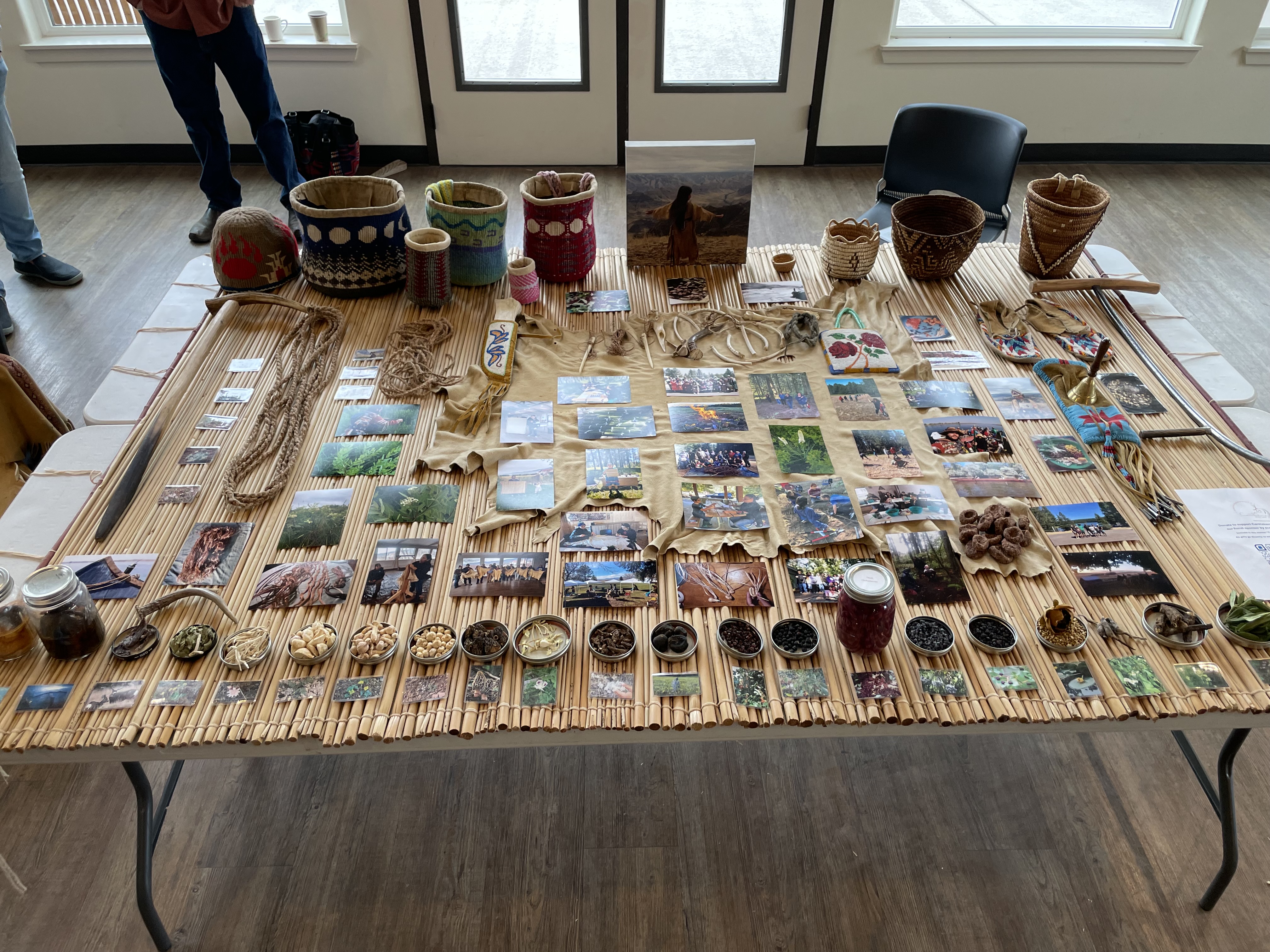
Naknuwiłáma Tiičámna First Foods, medicines, and textiles display set the stage for the carbon-focused discussions that took place as part of the event. Credit: Jeanine Gordon Sept/Oct 2025
About the Event
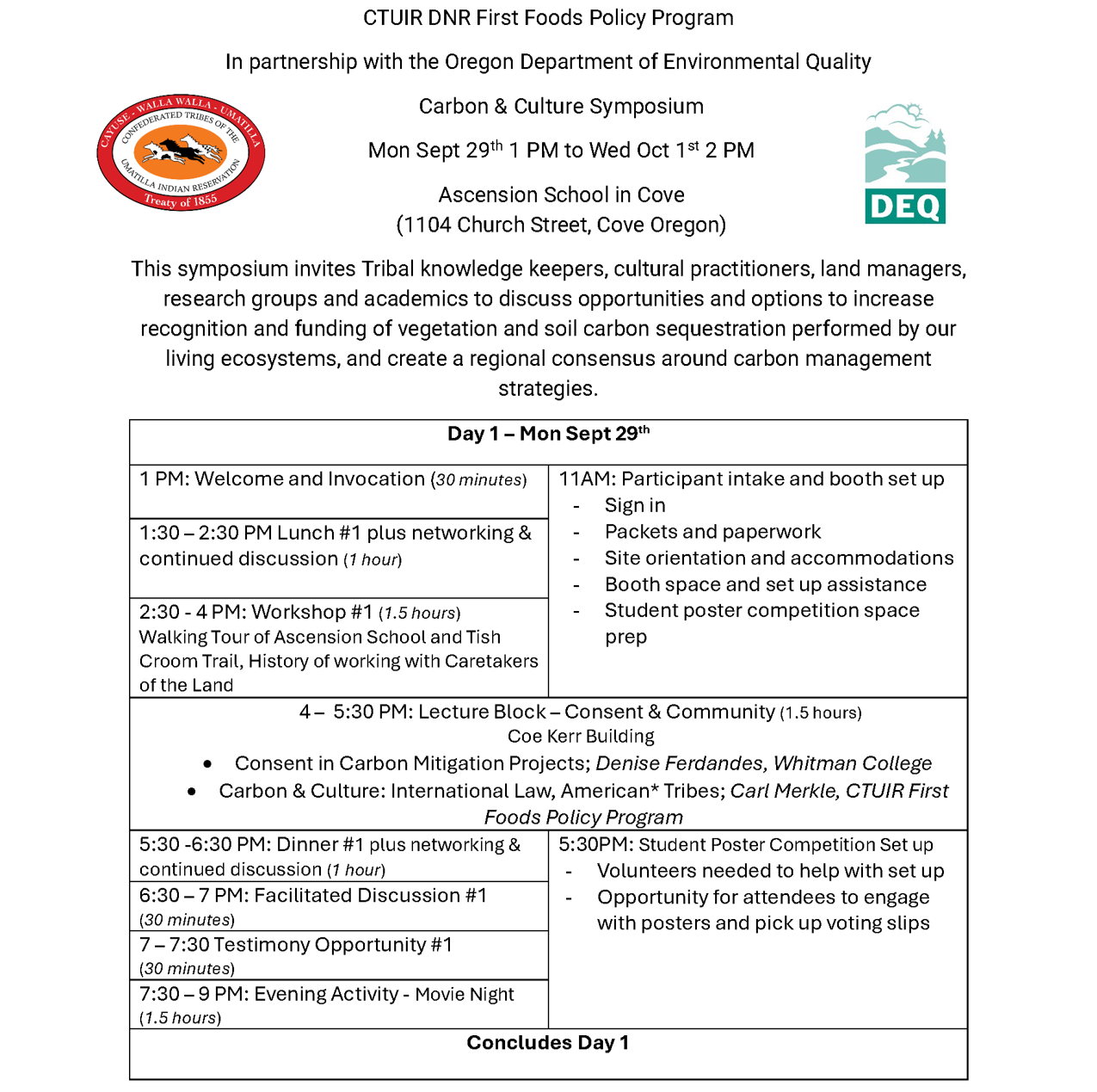
The Carbon & Culture Symposium invited Tribal Knowledge keepers, cultural practitioners, land managers, research groups, academics, and those who share CTUIR’s vision for the future to join us for a 3-day gathering at the Ascension School. Carbon management strategies are being proposed for our Columbia Plateau region, however our First Foods and working lands are being left behind. This event offered lectures by scientists and systems thinkers, alongside Indigenous knowledge workshops hosted by Naknuwiłáma Tiičámna (Caretakers of the Land).
WHY THIS SYMPOSIUM?
Our lands and systems that support First Foods have a huge role to play in preventing and reducing carbon emissions. This event hosted informed discussions about options, risks, and opportunities for carbon management while centering Tribal communities and relationships to the land. Around the world, carbon mitigation has the potential to be used for new land dispossession and access disruption for Indigenous people when these projects are implemented over the objections of Indigenous communities or without adequate consultation. In the United States, Indigenous land stewardship provide pathways for climate resilience, carbon emissions reduction, and carbon sequestration approaches that are accountable to ancestral lifeways and First Foods. Tribal Treaties are strong legal mechanisms to motivate climate action and the United Nation's framework on Free, Prior, and Informed Consent (FPIC) provides guidance on how carbon mitigation initiatives can meaningfully consult with Tribes and communities in project development and implementation.
Below are highlights from the event. Additional videos and materials are provided at the links provided. Scroll down to the bottom of the page to find downloadable presentation slides, event reports, and other materials.
Dogbane Cordage Workshops with Naknuwiłáma Tiičámna
Central to our conversation about carbon is Tribal culture and Indigenous knowledge, and there is no better way to understand Native connection to land and place better than being part of a cultural practice rooted in place. To cement this understanding of Tribal peoples’ intimate connection with the land that sequesters and manages carbon, Naknuwiłáma Tiičámna hosted two rounds of their workshop to learn about the Dogbane Hemp plant (Apocynum cannabinum) and how to work with this native plant to create beautiful and functional textiles that can be part of basketry and other larger construction practices.
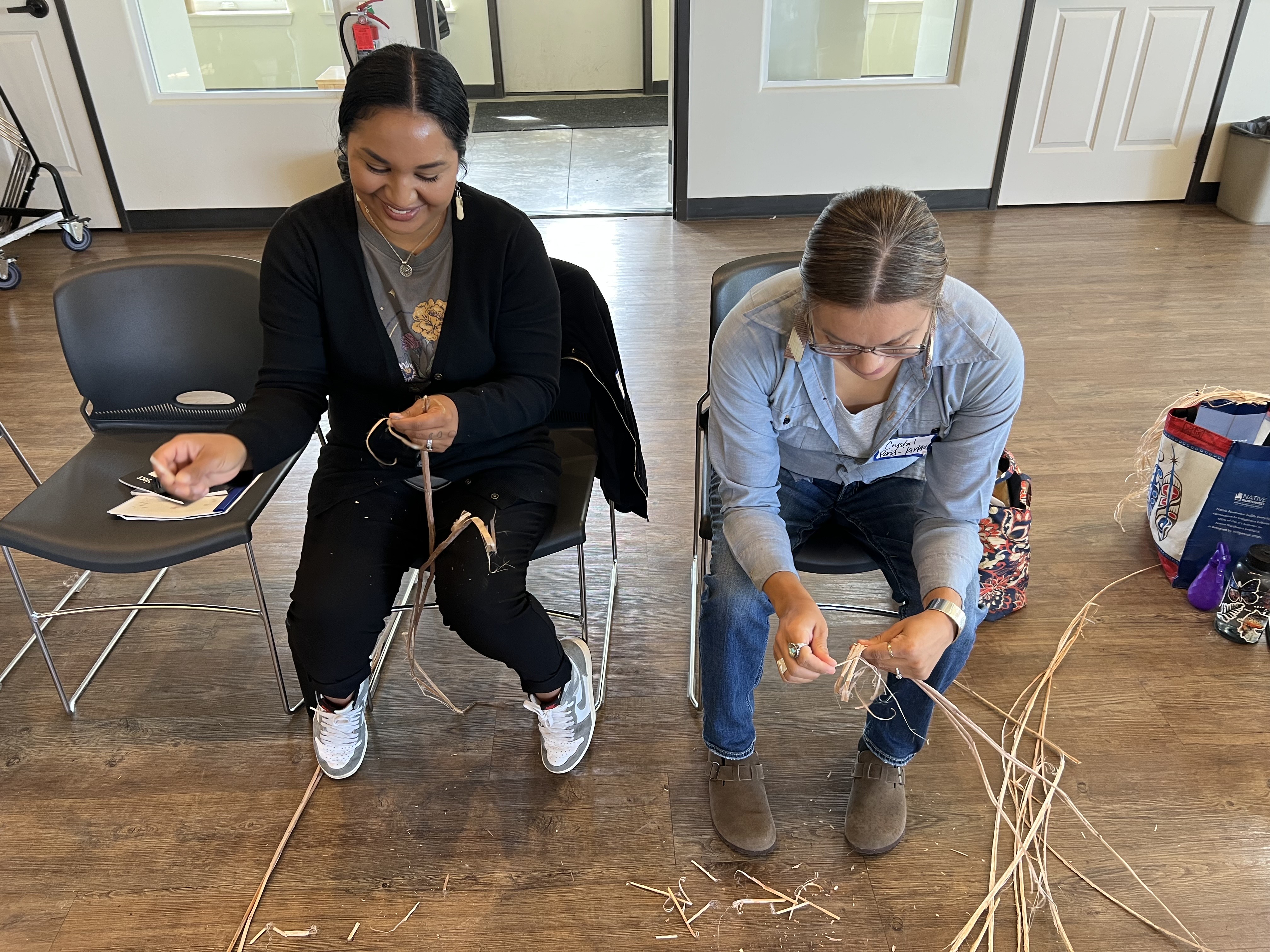
Symposium attendees participate in Naknuwiłáma Tiičámna's Dogbane Cordage Making workshop, which was offered as a central feature of the event. Dogbane is a native plant species that has been used for textiles creation for Tribal people but has been threatned by carbon emitting practices like wetland draining, agricultural tillage, and urban development. Credit Monica Paradise 2025
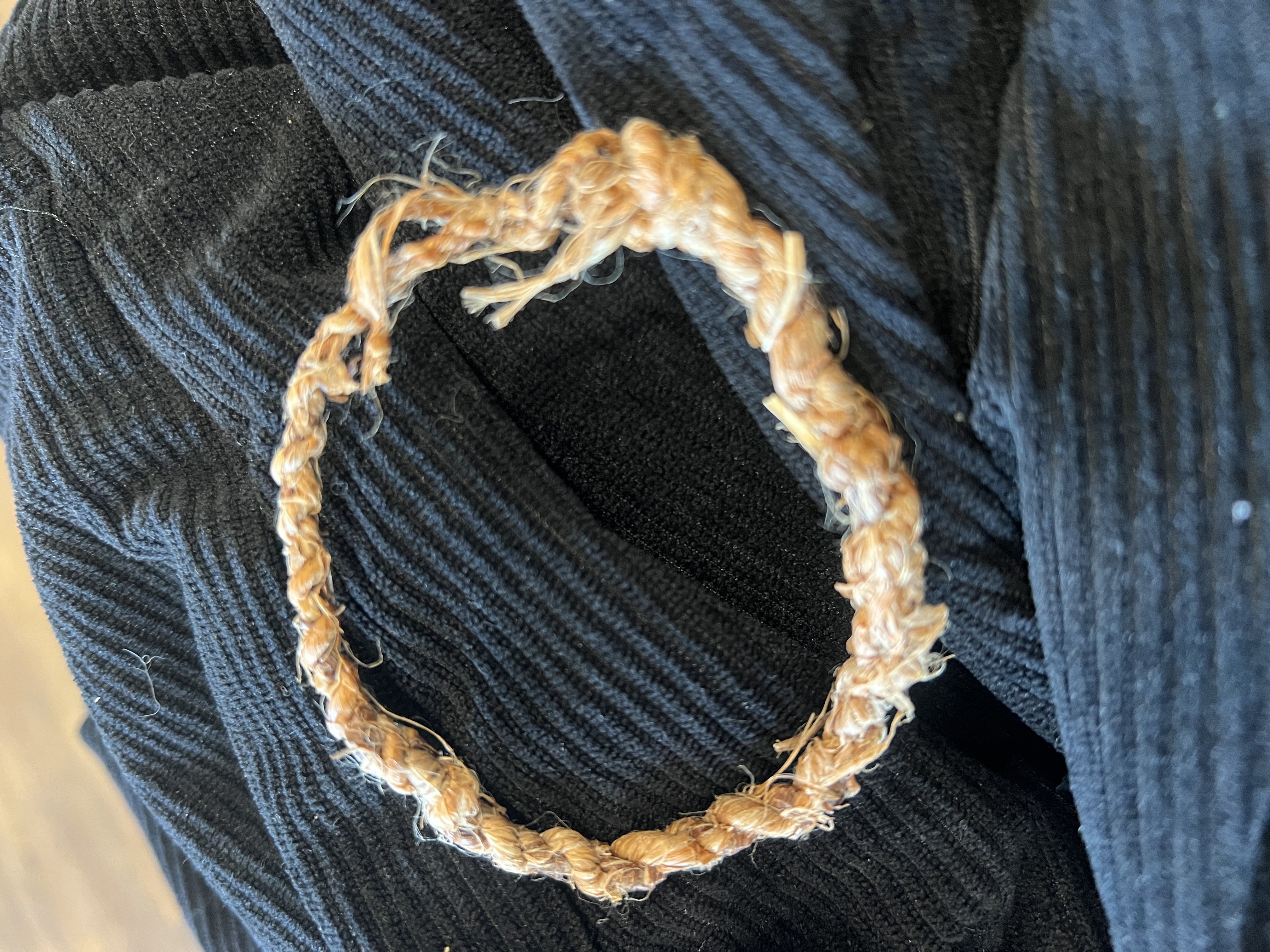
Dogbane cordage finished product; this native plant provides a beautiful and soft golden fiber that can be used in basket and clothing weaving. Credit Monica Paradise 2025
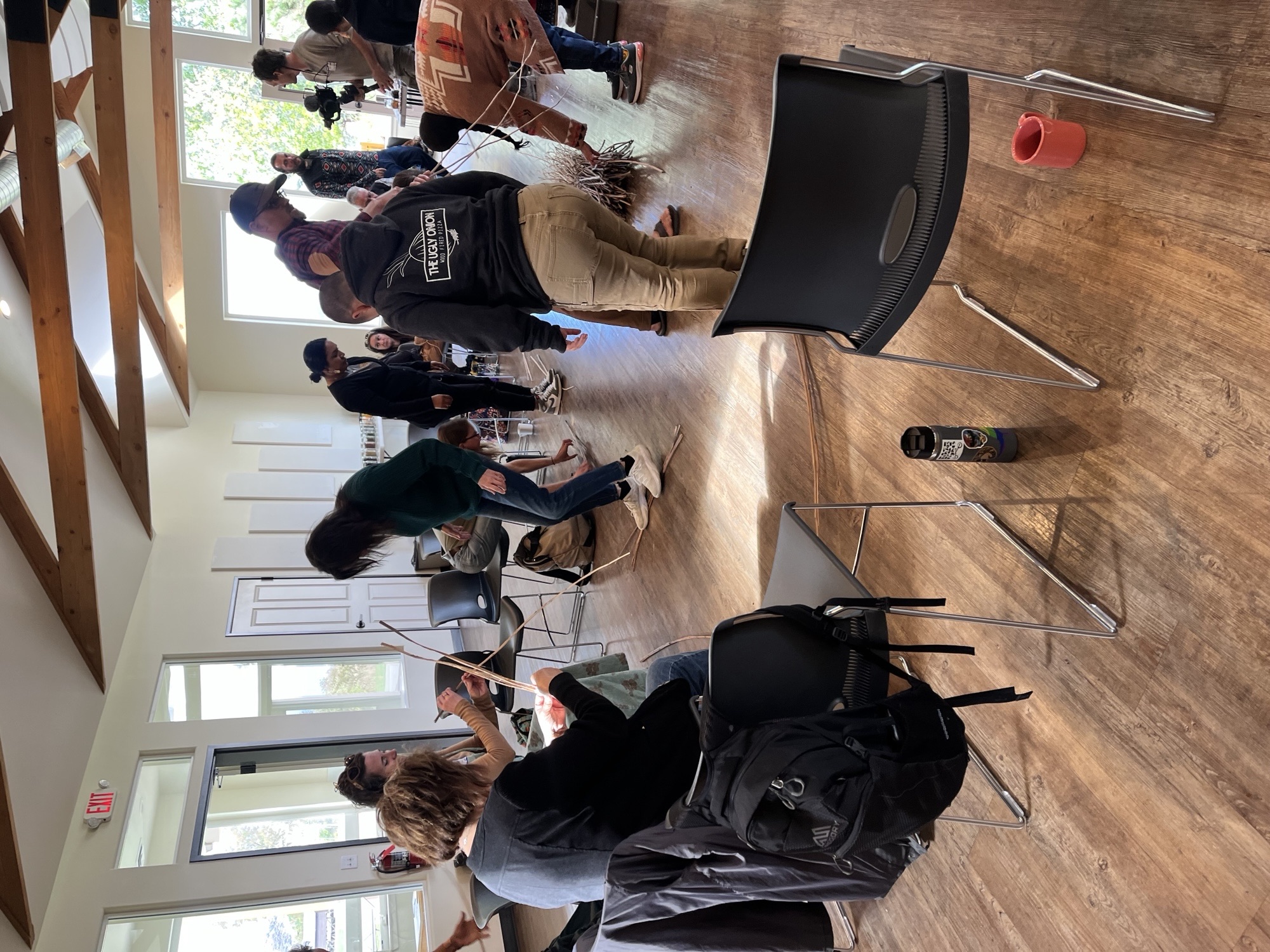
Symposium participants work with the Dogbane plant to loosen fiberous material used for making cordage. Credit: CTUIR DNR FFPP Ermia Butler 2025.
Day 1
Day 1 Consent and Community Lecture Session
Indigenous communities globally are often the epicenter of testing for geoengineered “climate solutions,” and many initiatives do little or nothing to meaningful secure consent from these communities. Here in the Columbia River basin, the situation is similar as geotechnical solutions are being funded to proceed in a test phase, with little planning to meaningfully engage local communities and Columbia River Treaty Tribes around the initiatives. This lecture session examines what it means to meaningfully engage with Indigenous peoples and some international mechanisms like the United Nations Declaration of Rights of Indigenous Peoples (UNDRIP) that provide a framework that can be used by those seeking to secure consent for these projects.
- “Consent in Carbon Mitigation Projects”
Presenter: Denise Fernandes, Whitman College - “International Law, Native American Tribes”
Presented by Carl Merkle, CTUIR First Foods Policy Program
Please find the lecture slides and recordings on the dedicated CTUIR webpage: CTUIR - C&CS 2025 Consent and Community, Hot Topics, PNW Carbon Policy Lecture Sessions
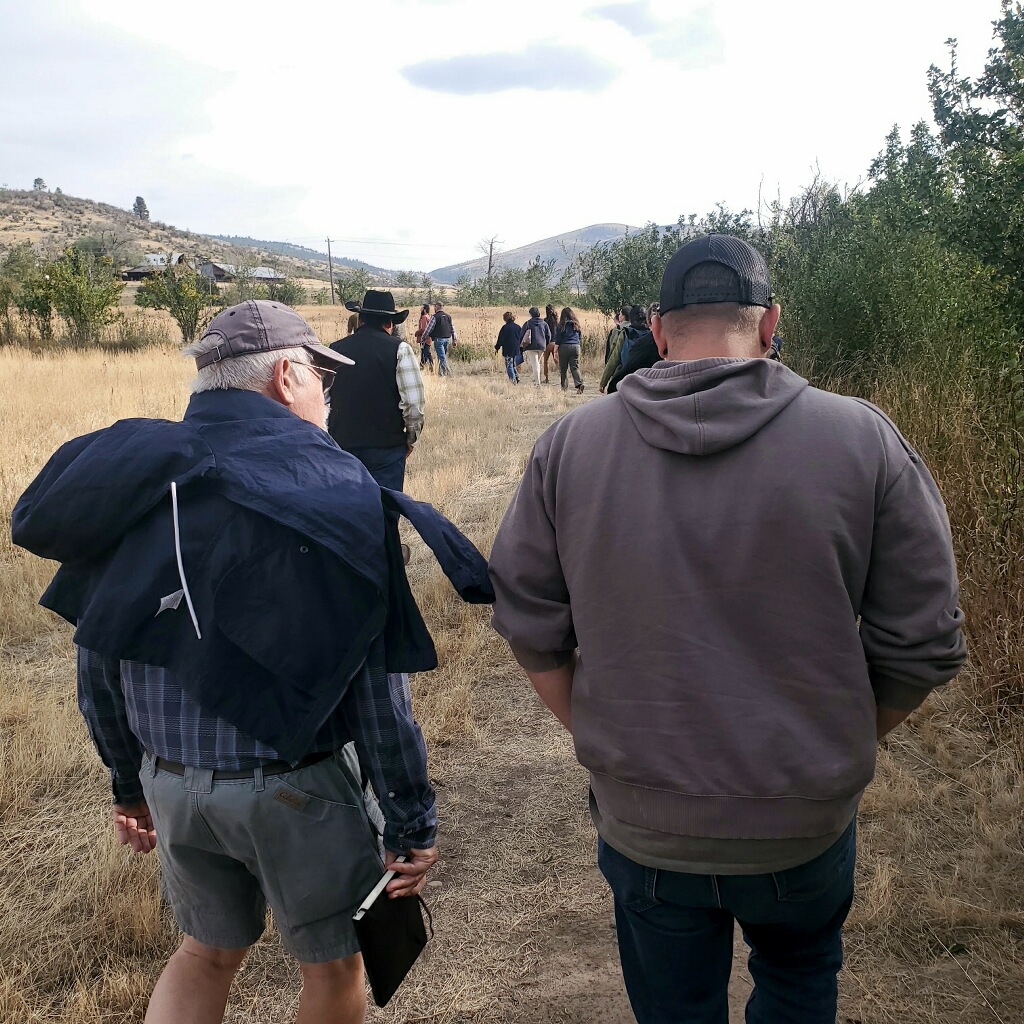
Symposium participants follow Bobby Fossek along the Tish Croom Nature Trail to see First Foods restoration in action. Credit Stephen Martinez, 2025.
Day 2 PM
Day 2 Hot Topics Lecture Session
Accelerated implementation for industrialized approaches to carbon removal have been funded for the Columbia River basin and surrounding lands. As this technology moves rapidly into a planning and development phase, many communities within the affected region have not seen meaningful opportunities to provide consent or rejection of these approaches, including 1855 Treaty Tribes. This rapid motion towards these technologies are one of the galvanizing reasons for the organizing and implementation of this Symposium.
To address these technologies and concerns around consent and Tribal Treaty Rights, the Hot Topics Lecture Session was offered without any competing activity mid day on the main Day 2.
- “Geological Carbon Sequestration in Oregon: An Update on State Investigations, September 2025”
Presented by Jason McClaughery, Richard Walker, and Alex Lopez, Oregon Dept of Geology and Mineral Industries (DOGAMI) - “Understanding Carbon Pricing Frameworks”
Presented by Thomas Joseph, Carbon Pricing Educator with Indigenous Environmental Network (IEN)
Please find the lecture slides and recordings on the dedicated CTUIR webpage: CTUIR - C&CS 2025 Consent and Community, Hot Topics, PNW Carbon Policy Lecture Sessions
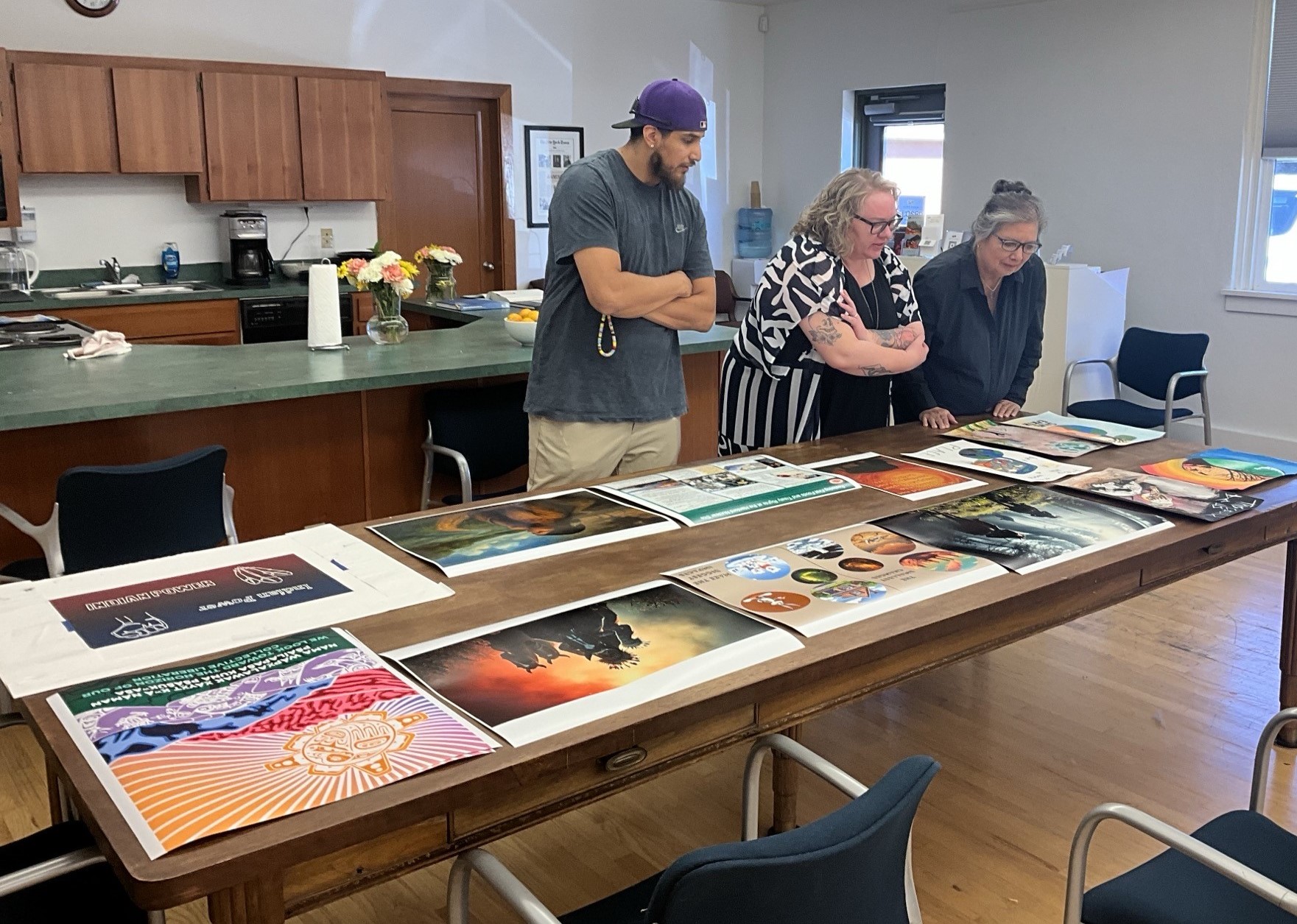
Staff and contributors for Crow Shadow Institute for the Arts review and judge student poster competition entries .Credit: CTUIR DNR FFPP Sept 2025
Day 3 AM
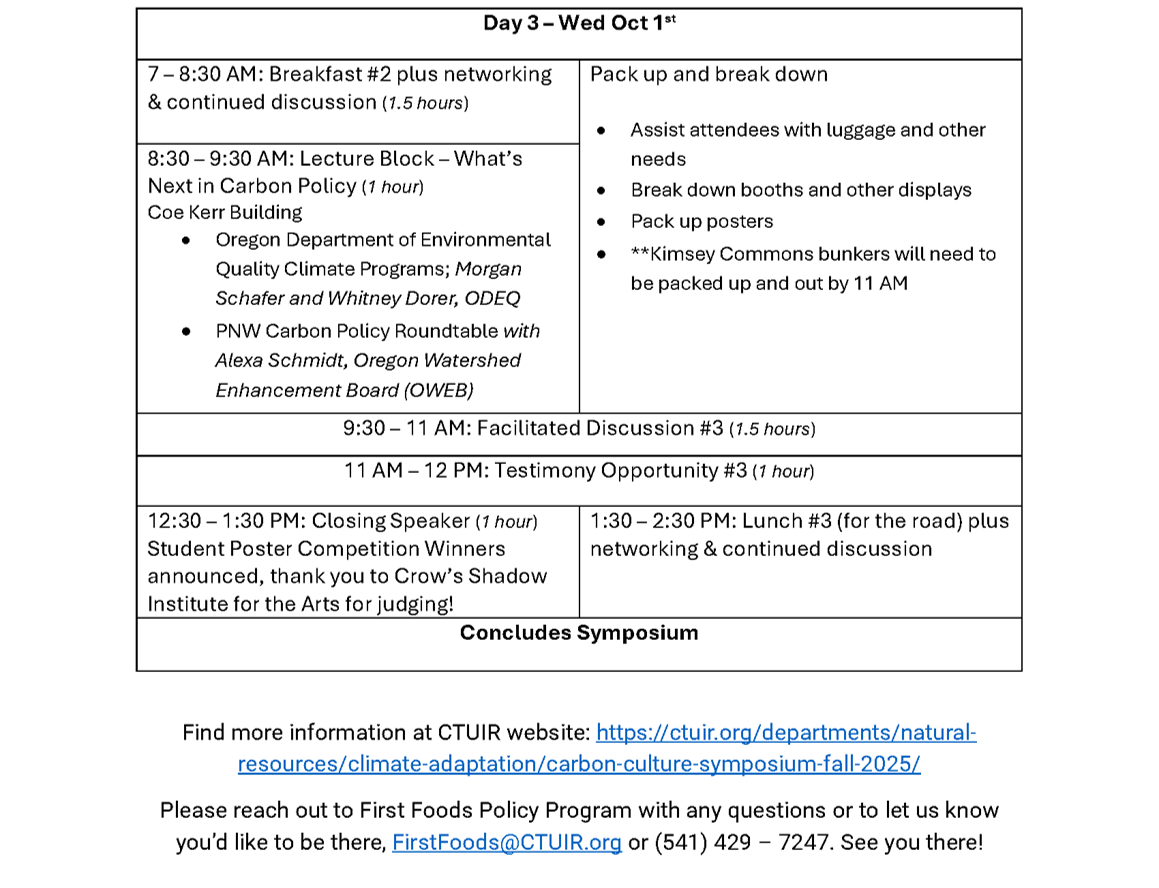
Day 3 Pacific Northwest Carbon Policy
On the event’s final day, we were looking towards the future. This day was an opportunity to bring together all the concepts and perspectives we learned about over the past two days, and explore different funding and policy mechanisms that exist and are coming online for the state of Oregon and the Pacific Northwest region.
- "Carbon Sequestration in Oregon: Natural Climate Solutions"
Presented by Alexa Schmidt, Oregon Watershed Enhancement Board (OWEB) - “Oregon Department of Environmental Quality Climate Programs”
Presented by Morgan Schafer, Climate Pollution Investments Coordinator, and Whitney Dorer, Climate Policy Community Engagement Coordinator, ODEQ
Presentation slides from this lecture are available at the Symposium archive on the CTUIR website: CTUIR - C&CS 2025 Consent and Community, Hot Topics, PNW Carbon Policy Lecture Sessions
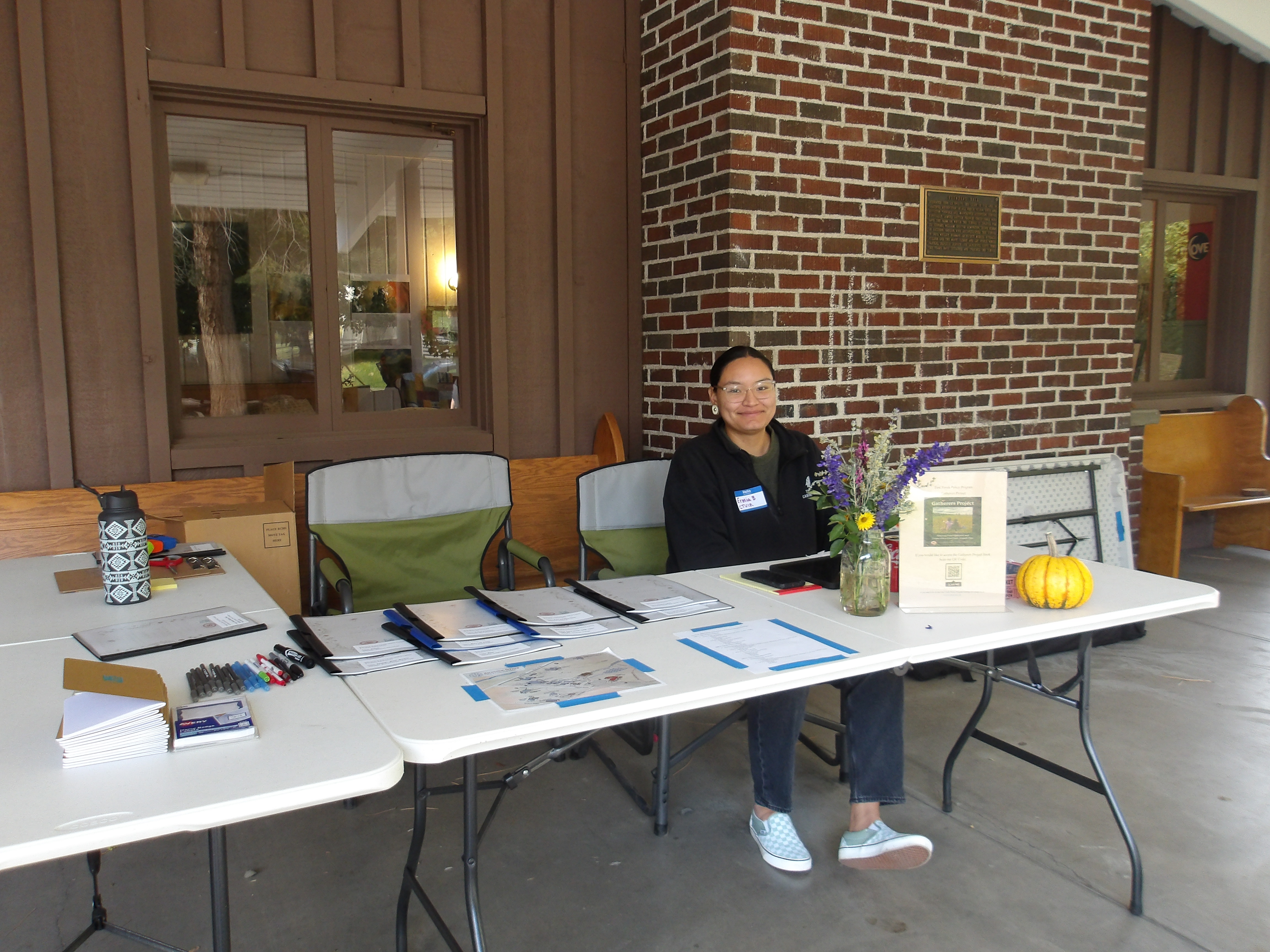
Symposium attendees checked into the event at the welcome table ouside Founders Hall; thank you to First Foods Policy Program's Ermia Butler and Althea Huesties-Wolf for staffing the table and making everyone feel welcome! Photo Credit: CTUIR DNR FFPP 2025
Day 2 AM
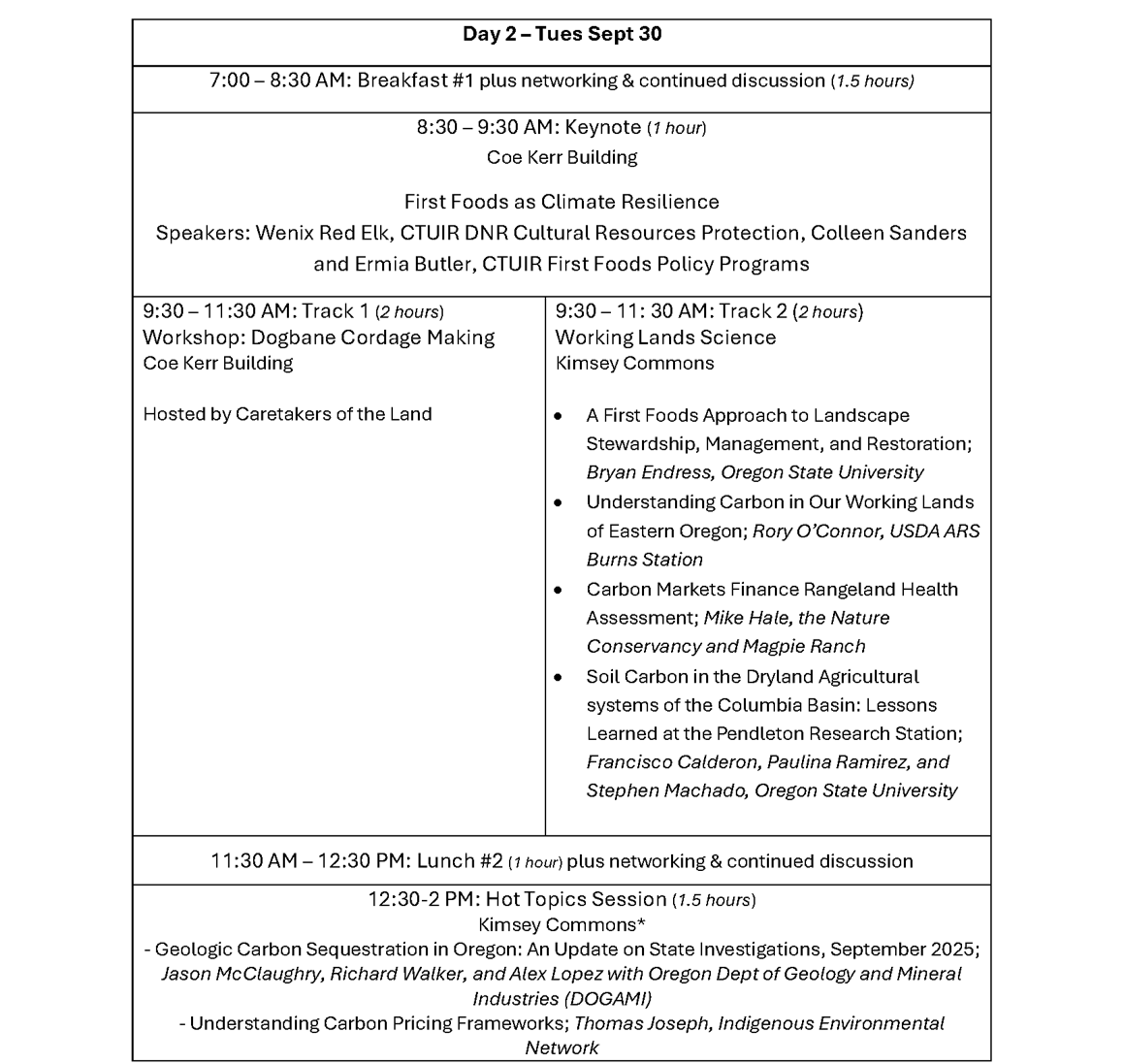
Keynote Presentation:
“First Foods as Climate Resilience”
Presented by Wenix Red Elk, Public Outreach and Education Specialist for the Cultural Resources Protection Program, Colleen Sanders, Climate Adaptation Planner for First Foods Policy Program, and Ermia Butler, Climate Change Intern for First Foods Policy Program
Please find the slides and recording for this lecture on this page below.
Day 2 Working Lands and Systems Lectures
Afternoon lecture sessions were offered opposite to the Dogbane Cordage workshops and emphasized the science and practice of various carbon management options for our region. Two sessions offered similar but distinct perspectives on carbon management through the holistic management of “working lands,” and other landscape scale natural and manmade systems. These lectures were offered by our Symposium partners, and we are grateful for their generosity with their time and expertise. Below are overviews of these sessions and the presentations contained within.
Within this session, the following lectures were held:
- "A First Foods Approach to Landscape Stewardship, Management, and Restoration"
Presented by Dr. Bryan Endress, Union County Oregon State University - "Understanding Carbon in Our Working Lands of Eastern Oregon"
Presented by Dr. Rory O’Connor, USDA Agricultural Research Service (ARS) Burns Station - "Carbon Markets Finance Rangeland Health Assessment; The Nature Conservancy"
Presented by Michale Hale, with the Nature Conservancy and Magpie Ranch - "Soil Carbon in the Dryland Agricultural systems of the Columbia Basin: Lessons Learned at the Pendleton Research Station; Oregon State University"
Presented by Dr. Francisco Caulderon, OSU Columbia Basin Agricultural Research Center
Please find the lecture slides and recordings on the dedicated CTUIR webpage: CTUIR - C&CS 2025 Working Lands Science, Lands and Systems Lecture Sessions
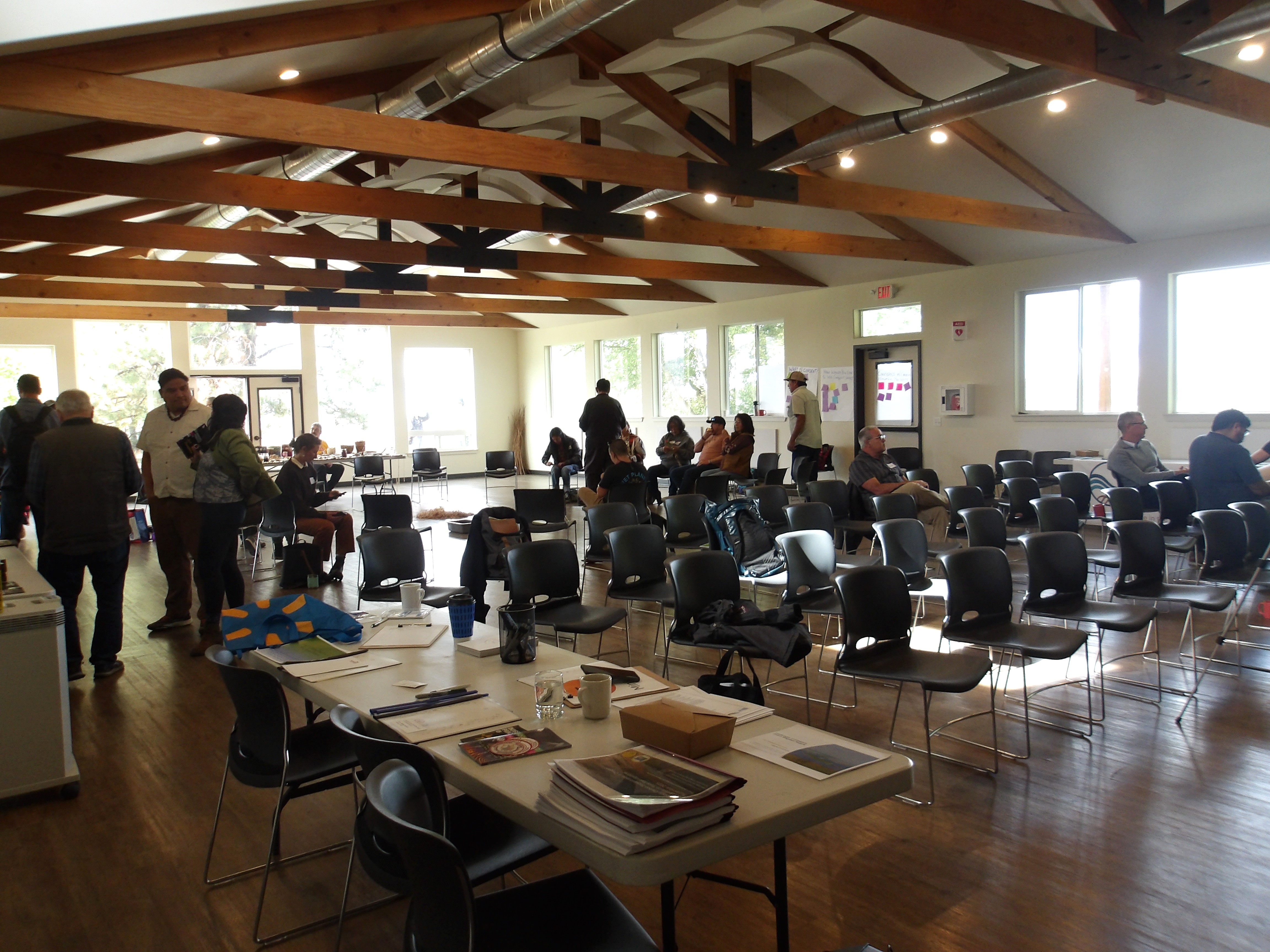
Symposium participants share space and conversation during a break in the lecture sessions. Credit: CTUIR DNR FFPP Sept/Oct 2025
Day 2 PM
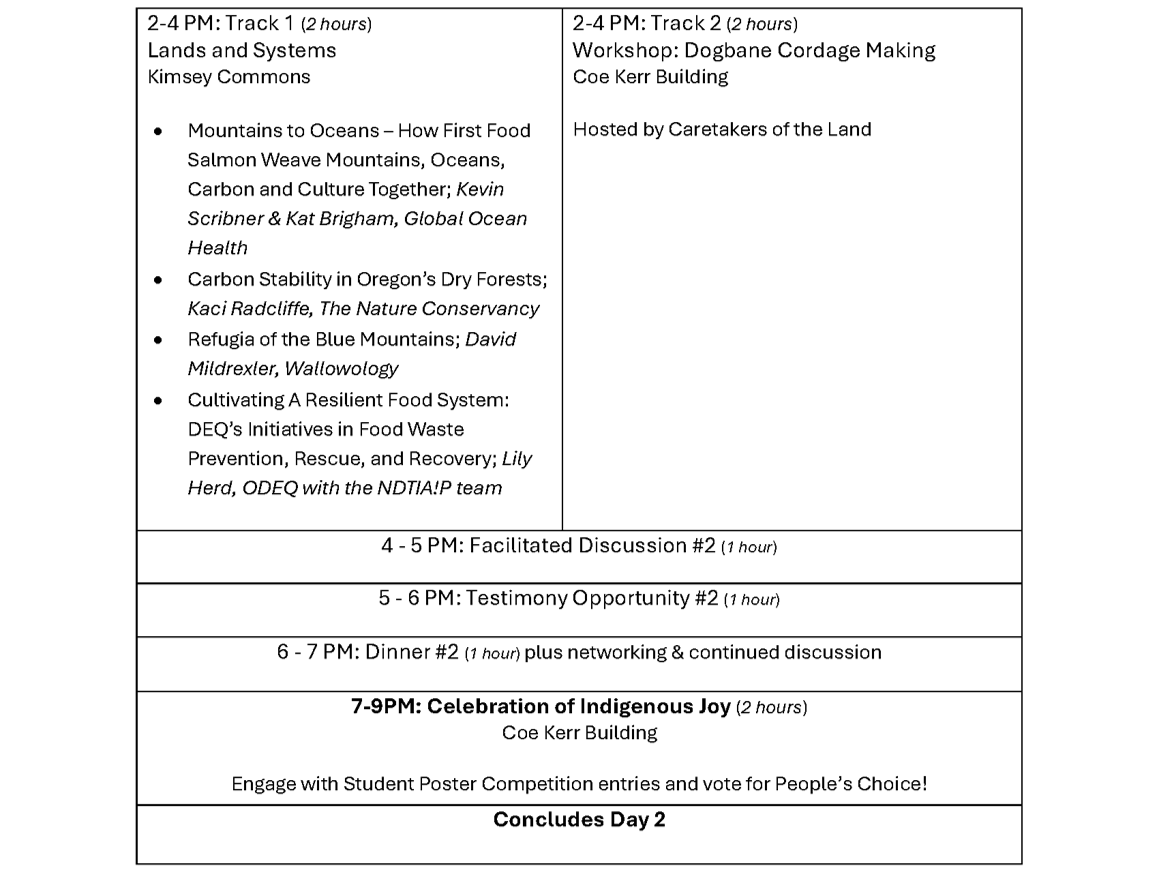
Session 2: Lands and Systems
Many of the ways we manage systems can create opportunities to reduce and prevent carbon emissions in ways that are quantifiable, trackable and have additional benefits to lands and communities. This session provided information on how systems level approaches to both our landscape and built systems provide opportunities to reduce and prevent carbon emissions.
Within this session, the following lectures were held:
- "Mountains to Oceans - How First Foods Salmon Weave Mountains, Oceans, Carbon and Culture Together"
Presented by Kevin Scribner, Brad Warren, Francesca Hillary, Global Ocean Health - "Carbon Stability in Oregon’s Dry Forests"
Presented by Kaci Radcliffe, The Nature Conservancy - "Refugia of the Blue Mountains"
Presented by David Mildrexler, Eastern Oregon Legacy Lands and Wallowology - "Cultivating A Resilient Foods System: DEQ’s Initiatives in Food Waste Prevention, Rescue, and Recovery"
Presented by Lily Herd, ODEQ, with the CTUIR NDTIA!P Team
Presentation slides from this lecture are available at the Symposium archive on the CTUIR website: https://ctuir.org/departments/natural-resources/first-foods-policy/climate-adaptation/carbon-culture-symposium-fall-2025/ccs-2025-working-lands-science-lands-and-systems-lecture-sessions/
Day 2: Celebration of Indigenous Joy
This event had a goal to re-centering Tribal sovereignty and Indigenous peoples in land management and climate resilience discussions, in contrast to other efforts around carbon mitigation. Our event intentionally uplifts Native people, their connection with lands stewarded through ancestry, and the joy of being integrally part of a place and culture.
Below are the presentations and performances; recordings of some sessions are available on the Youtube channel, however Tribal songs and stories have not been made public due to cultural etiquette associated.
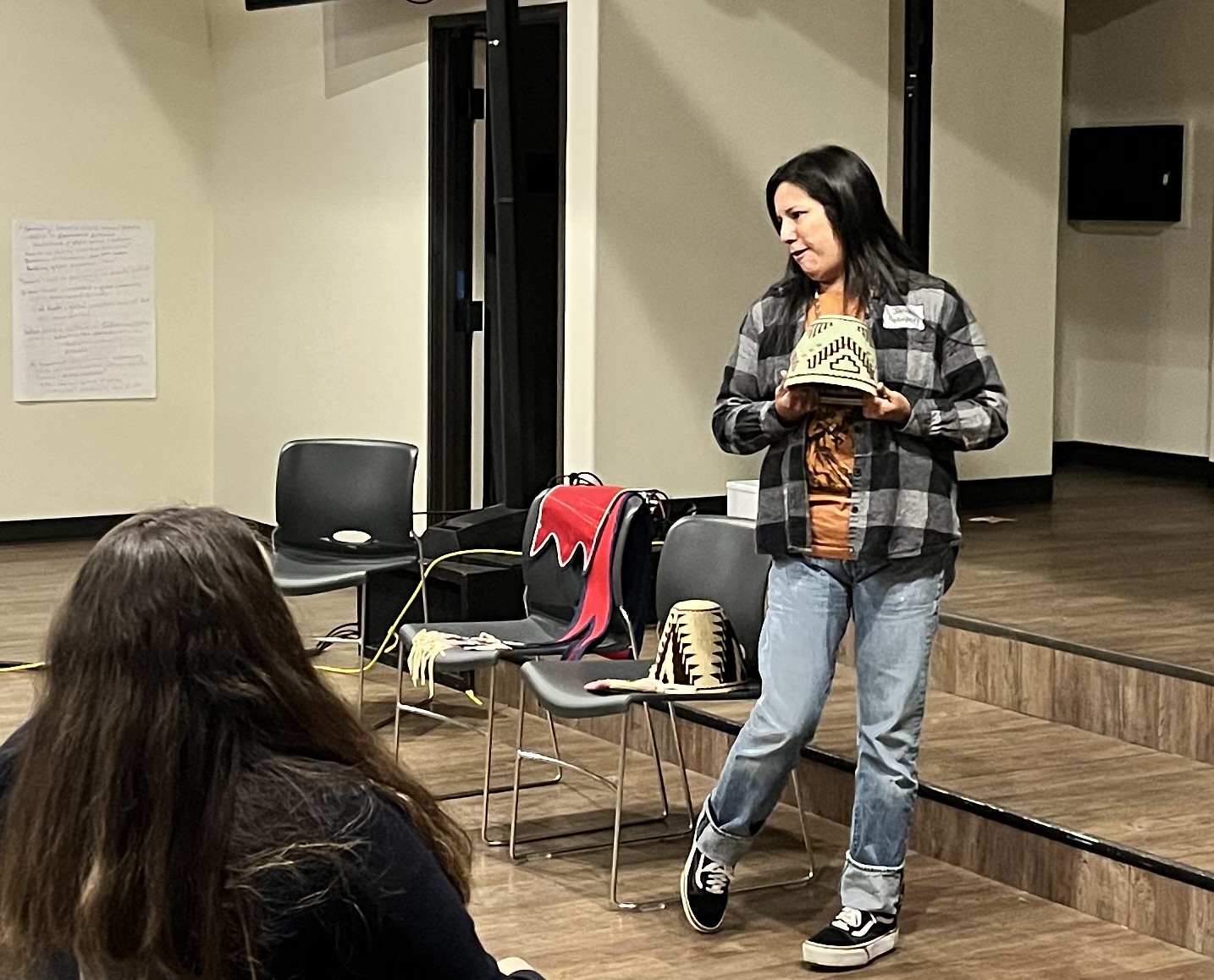
Jacy Sohappy with Crow's Shadow Institute for the Arts shows the seasonal-based Native crafts offered through workshops at the Institute. Photo credit: CTUIR DNR FFPP Ermia Butler Sept/Oct 2025
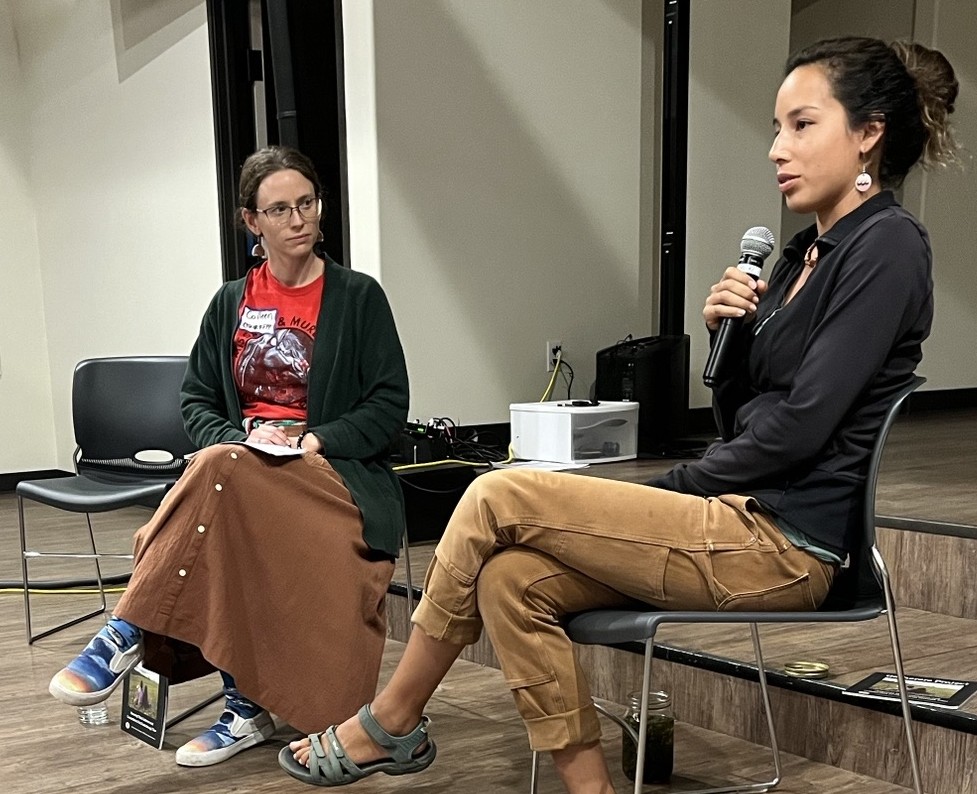
As a promotion for the CTUIR Gatherers Project publication, this interview in conversation with Brosnan Spencer provided a Gatherers perspective Photo credit CTUIR DNR FFPP Ermia Butler Sept/Oct 2025
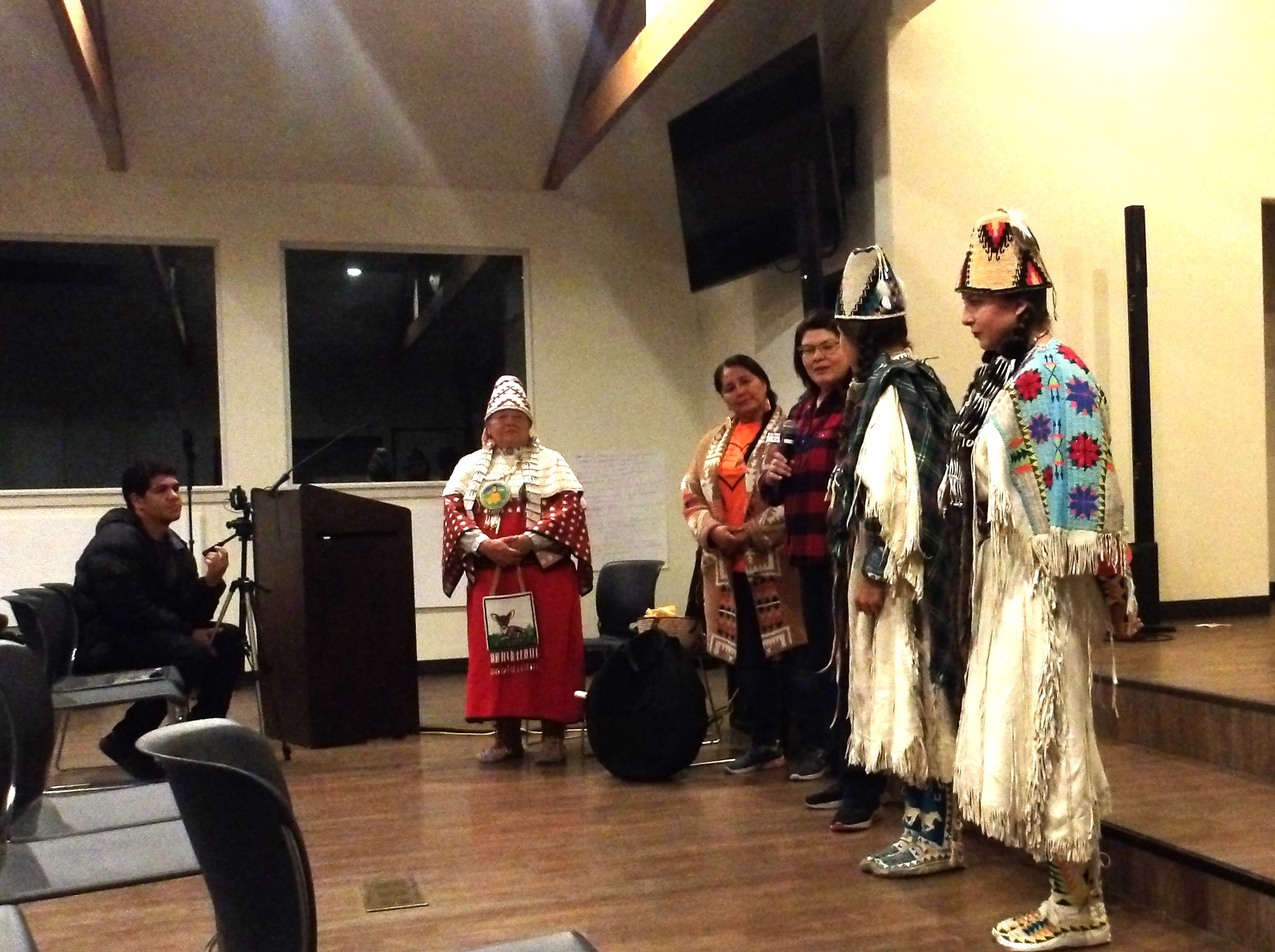
To close the Celebration, Mildred Quaempts offered our event stories, song, and dance, supported by Manaia and Stella Wolf. Credit CTUIR DNR FFPP Sept/Oct 2025
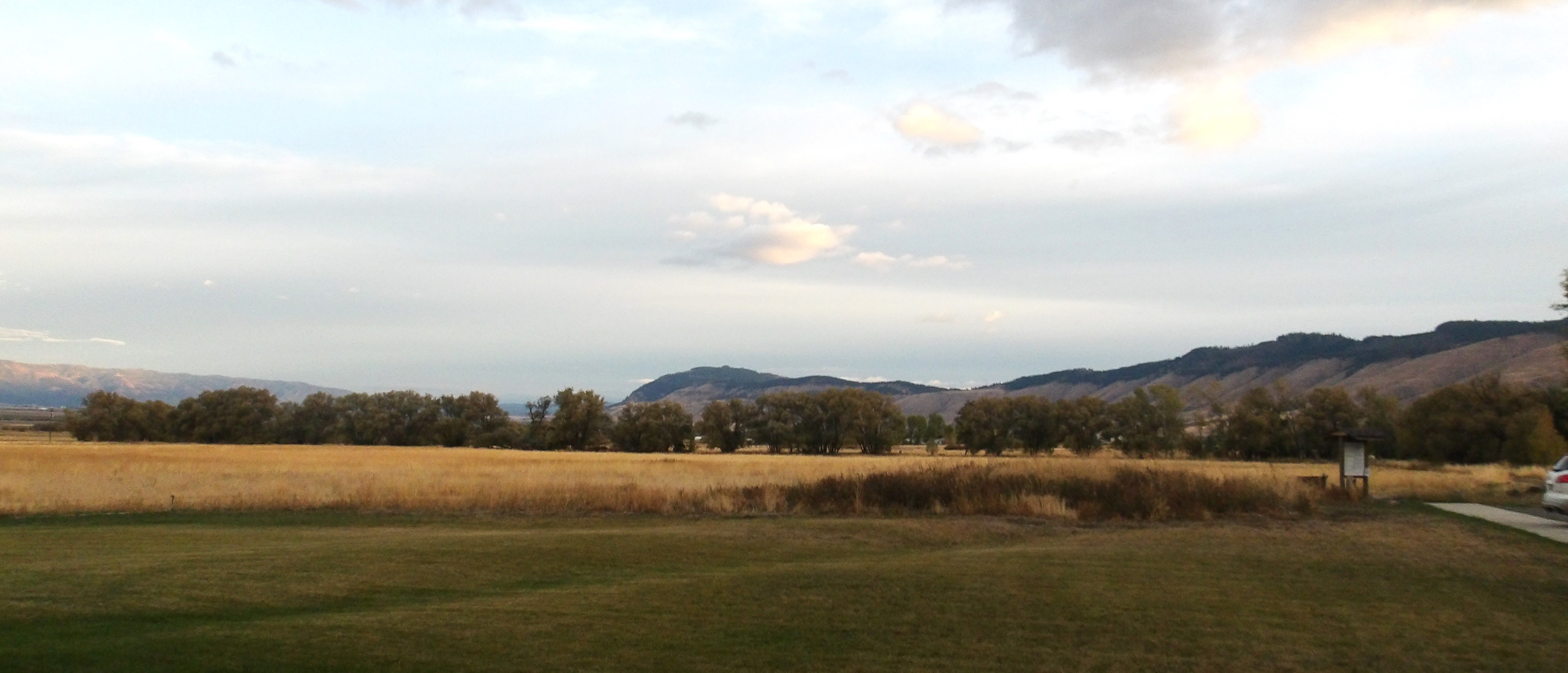
Ancestral lands of the Cayuse, Umatilla, and Walla Walla peoples were the only appropriate backdrop for our conversations about stewarding these lands and the carbon associated with our human activities. Thank you to the Cove Ascension School and Naknuwiłáma Tiičámna for hosting our gathering!
This event is the culmination of a partnership with the Oregon Department of Environmental Quality associated with the EPA Climate Pollution Reduction Grant (CPRG) Program, spanning early 2023 to the event in Fall 2025, and ongoing. Below are links to materials that have been produced as part of this effort, and will provide you with a foundation of understanding of the information that will be covered during this working partnership.
Page updated 6.26.2026