


Food Waste Assessment
What are Our Organics of Interest?
According to the United States Environmental Protection Agency (EPA), 31% of food loss occurs at the retail and consumer levels, corresponded to approximately 133 billion pounds and $161 billion worth of food in 2010. The EPA estimates that 38% of food produced nationally is never eaten (ReFED 2024). In the United States in 2018, more food was sent to landfills than any other single material in our everyday trash. When this food ends up in landfills, it decomposes in conditions without oxygen, which create greenhouses gases that include methane, which contribute to the global climate crisis. This loss of food waste to landfills also represents a loss of all the resources that were used to create the food, including water, fertilizers, transportation fuels, and human labor.
Thus preventing food from ending up in landfills has many immediate and long term benefits, and community infrastructure to recover organic materials like food waste and other yard and vegetation management can support circular economy initiatives and boost local agricultural production.
Food Waste in Oregon
In Oregon, as nationally, food waste is a large contributor to landfill materials every year. The state of Oregon has committed resources to addressing this problem of inefficient use of resources through their 2050 Strategic Food Action Plan.
Food waste is generated from food service establishments associated with CTUIR. Much of this food waste is unpreventable; this includes non-edible portions of food preparation activities and decorative plant material from commercial operations. There is also a certain amount of post-consumer food waste created from guests and patrons of CTUIR food service and community events.
First Foods in the Waste Stream
While First Foods are treated with respect and care through the food preparation process by Longhouse Cooks and cultural practitioners, post-consumer food waste does not typically receive equivalent attention to respect of First Foods. Longhouse Cooks can only control waste that may happen in the preparation kitchen, but have far less control of what is thrown away at the end of the meal. Preventing food from being wasted is the role of families and communities, and the Longhouse provides food take-away supplies like Ziploc bags for families to prevent food waste by rescuing it for other family members and domestic animals.
However, much of the food waste left at the end of the meal has been partially consumed or contaminated through interaction with guests. For various reasons, this post-consumer food waste is not safe to be rescued for human consumption, and ends up in the landfill waste stream unless diverted. This food waste can often include First Foods, especially Foods that are not commercially or popularly consumed, as guests may not be familiar with them or appreciate their taste and texture. Thus these First Foods have the potential to end up in the landfill waste stream, unless a dedicated food waste diversion effort.
Thus the food waste diversion initiative documented in this Food Waste Assessment is an attempt to address First Foods with respect at all steps, even at the end of their time with us before they return to the soil. Through the implementation of this project, we have been able to document and capture First Foods that would have otherwise been lost from our lands and communities forever.
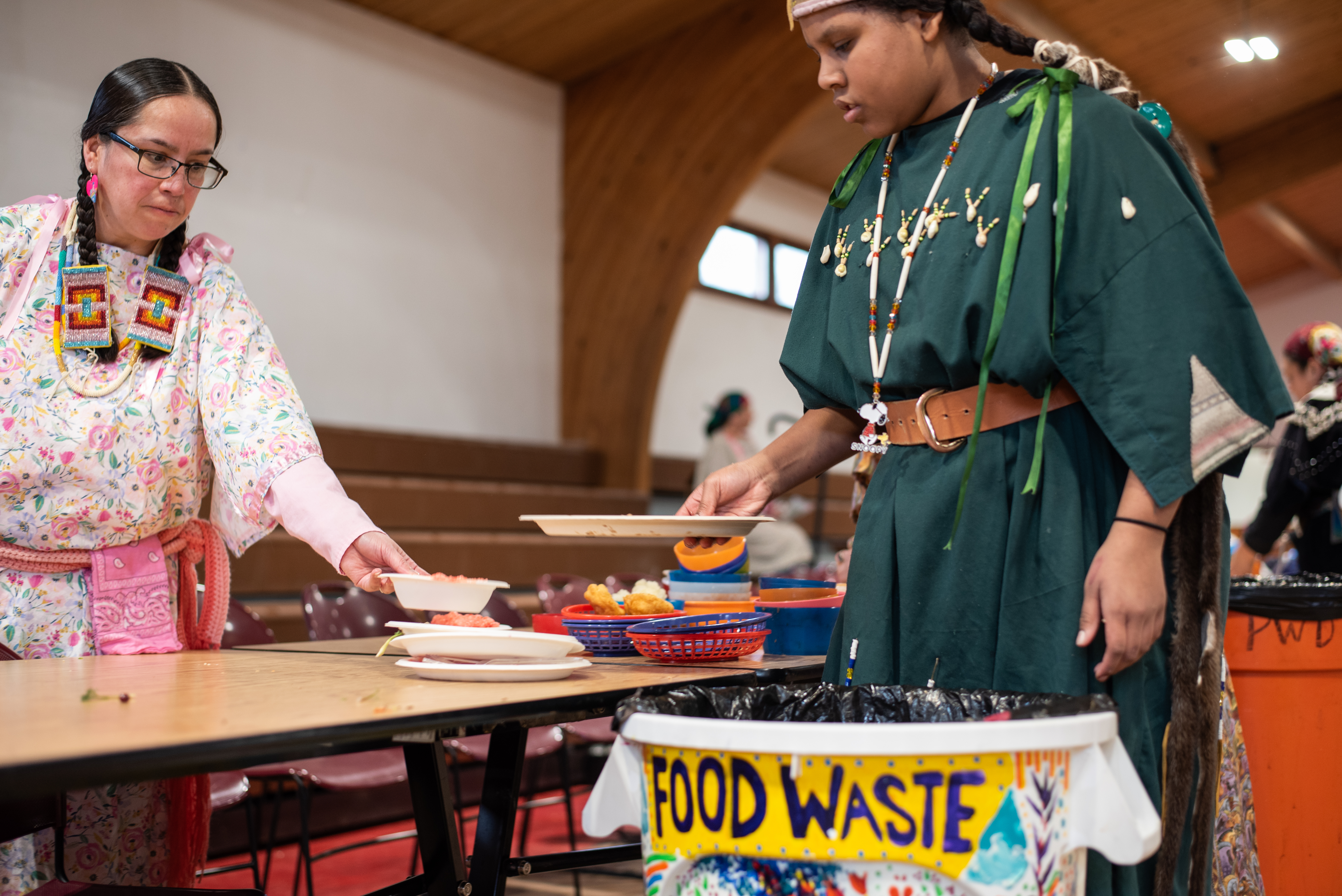
Longhouse Cooks and Community have been an integral part of this project; thank you to everyone who collaborated with us to make this project a success! Photo by Annie Warren, Northwest Public Broadcasting, 2026.
Project Service Area – Organics Recorded
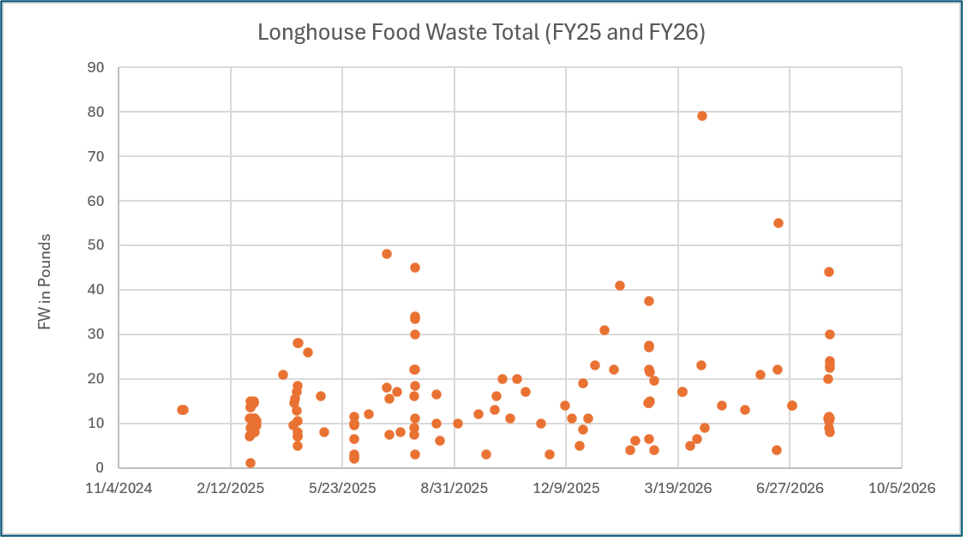
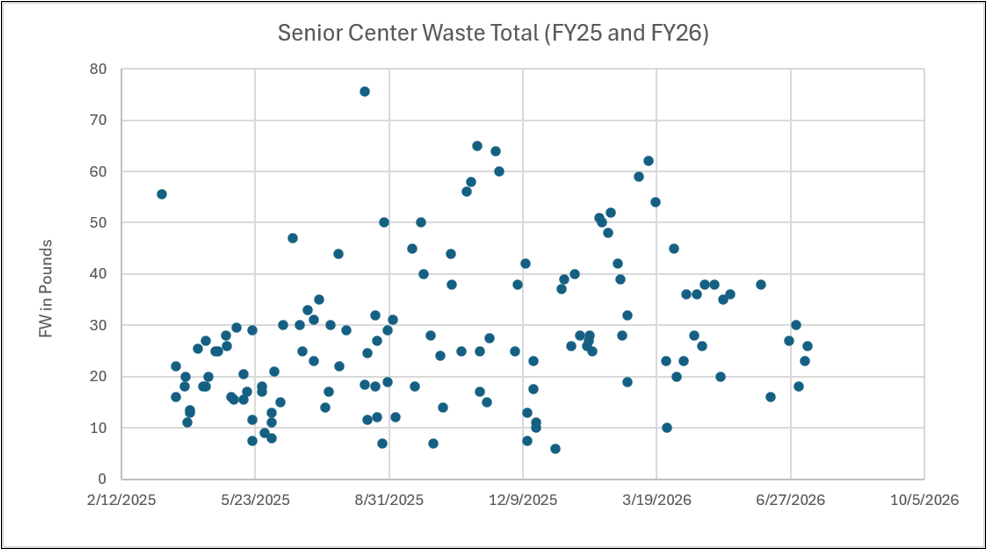
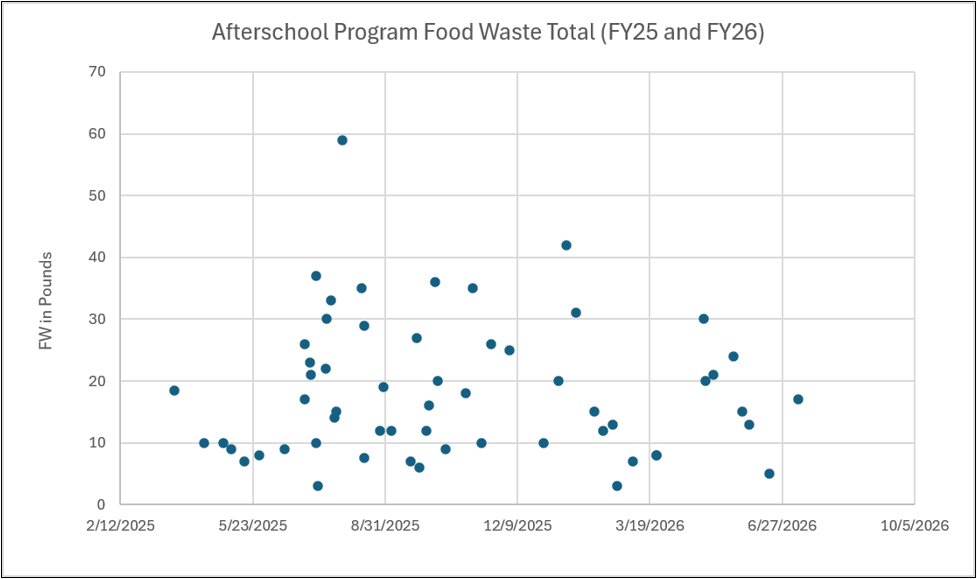
Our project service area was a roughly 1 mile radius around the Longhouse, which included a number of “host sites” that agreed to participate with the project. These host sites include the Nixyáawii Longhouse Feasts and select other events, the CTUIR DCFS Family Engagement Program’s Culture Nights hosted weekly at the Longhouse, the Nicht-Yow-Way Seniors Center operated by the Yellowhawk Tribal Health Center, the CTUIR Dept of Education’s Afterschool Program, and select residents of Mission.
These host sites were selected due to their proximity to a centralized food waste collection point near the Longhouse, their role in food preparation services to the Tribal community, and willingness to participate with project activities.
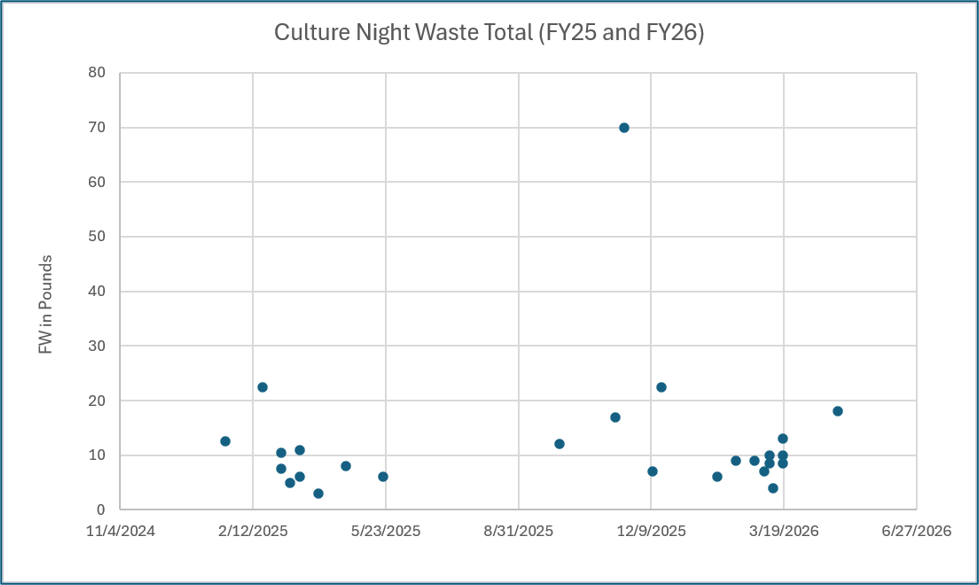
Longhouse Feast activities occur roughly quarterly, with attendance in the hundreds. Seniors Center serves 30-50 Tribal Elders and their families daily during the work week (Monday to Friday). Culture Night serves a set dinner menu prepared by program staff to 40-100 families roughly weekly during the school year (October to June). Afterschool Program serves snacks and a light meal to Tribal Youth daily year-round, transitioning from afterschool services during the school year to day camp services during summer months, serving 20-50 students. One Mission family signed up with our project, a household of two.
Assessment Methodology
Our report aims to understand the weight, volume, and types of food waste created by our project host sites to plan strategically for the methods and scale of a large organics recovery facility to serve our larger Tribal community. This project creates a baseline understanding of how frequently Tribal entities create food and other organic waste, what the general type and quality is, and what methods of food waste processing would be best to transition this food waste into a recovered resource material.
Community Perception of Food Waste
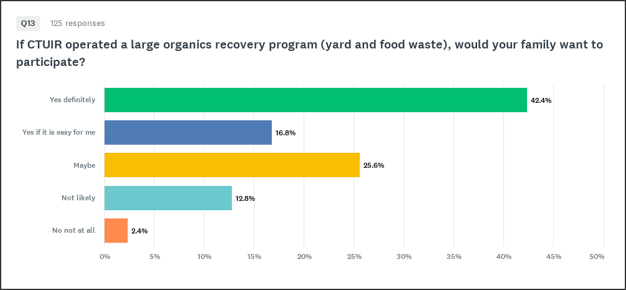
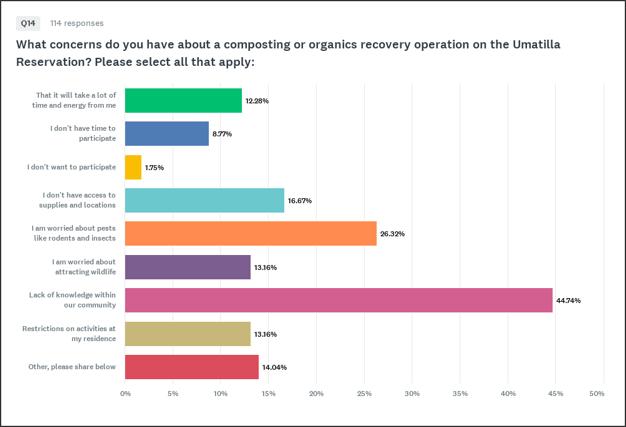
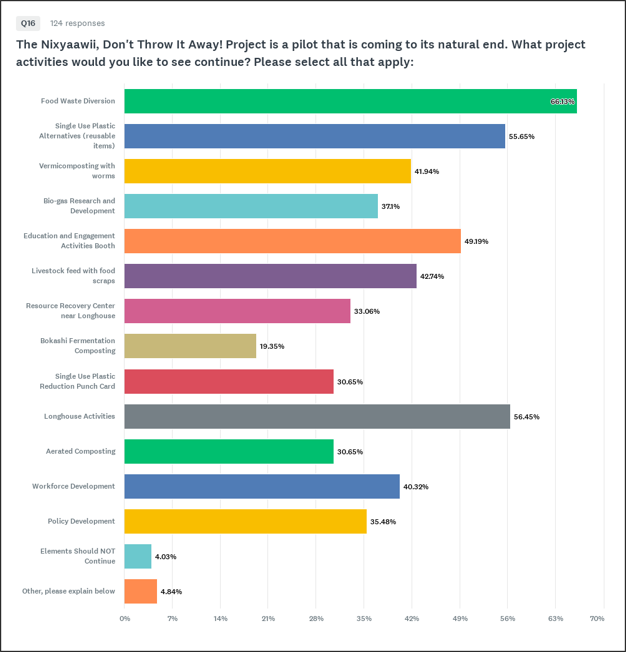
3.3 Results from Extended Surveys (2025 and 2026)
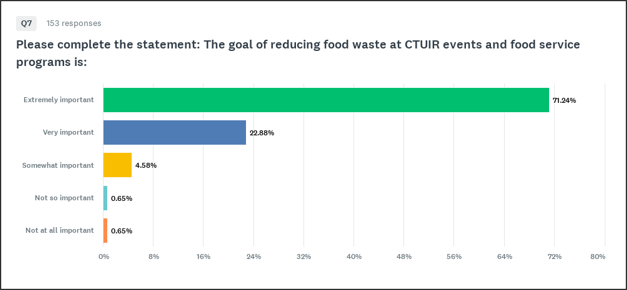
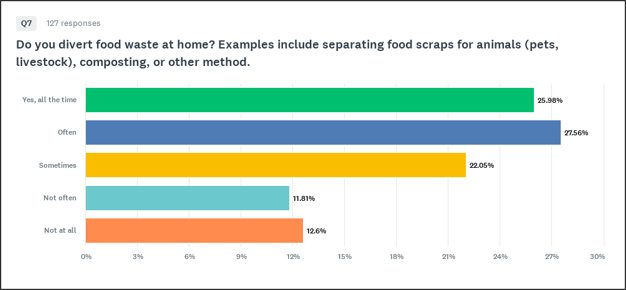
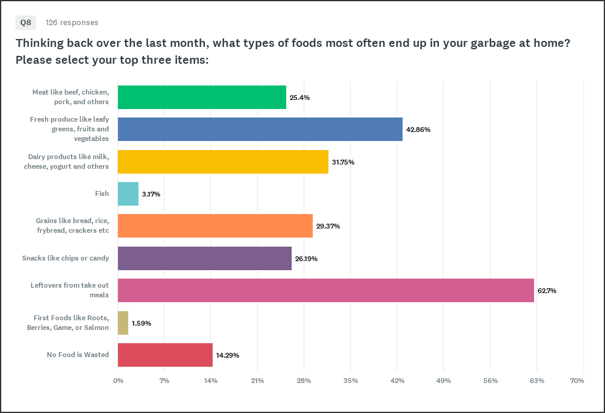
Once community behavior change became relatively established with our host site audiences, we developed two extended surveys to gather more rigorous data to be analyzed. These include our Longhouse Sustainability Survey, which was conducted from November 2025 to February 2026, and our End of Project Survey, conducted from June to September 2026. Both of these surveys aimed to provide scientifically rigorous community data on organics recovery related information that will help inform a future Organics Recovery Needs Assessment.
This material is based upon work supported by the U.S. Department of Agriculture, under agreement number 2024-70510-41990.
Any opinions, findings, conclusions, or recommendations expressed in this publication are those of the author(s) and do not necessarily reflect the views of the U.S. Department of Agriculture. In addition, any reference to specific brands or types of products or services does not constitute or imply an endorsement by the U.S. Department of Agriculture for those products or services.
USDA is an equal opportunity provider, employer, and lender.
Webpage updated: Oct 15 2026