


Community Capacity
“Capacity” within this project is loosely defined as the labor, knowledge, resources, and time available to a person or community to accomplish a goal. Our Tribal community often has a need for capacity to implement the vision and practices that our people want to see accomplished. Our community is filled with passionate, creative and innovative people, but with time and energy going to meeting day-to-day needs, we have a need to increase capacity in ways that will lead to lasting change.
Thus this project aims to directly address our community’s capacity to better understand and manage our resources, focusing on community and government services where they converge: at the Nixyaawii Community.
Building community capacity to address food and other organic waste required skill building and education within our community. Our project developed many educational materials to build this capacity, and customized our materials based on our audiences, which included Tribal youth, elders, government staff, leaders, and general community members. These materials are too numerous to include in the CTUIR Nixyaawii Food Waste Assessment appendix, but can be found for download below.
These include:
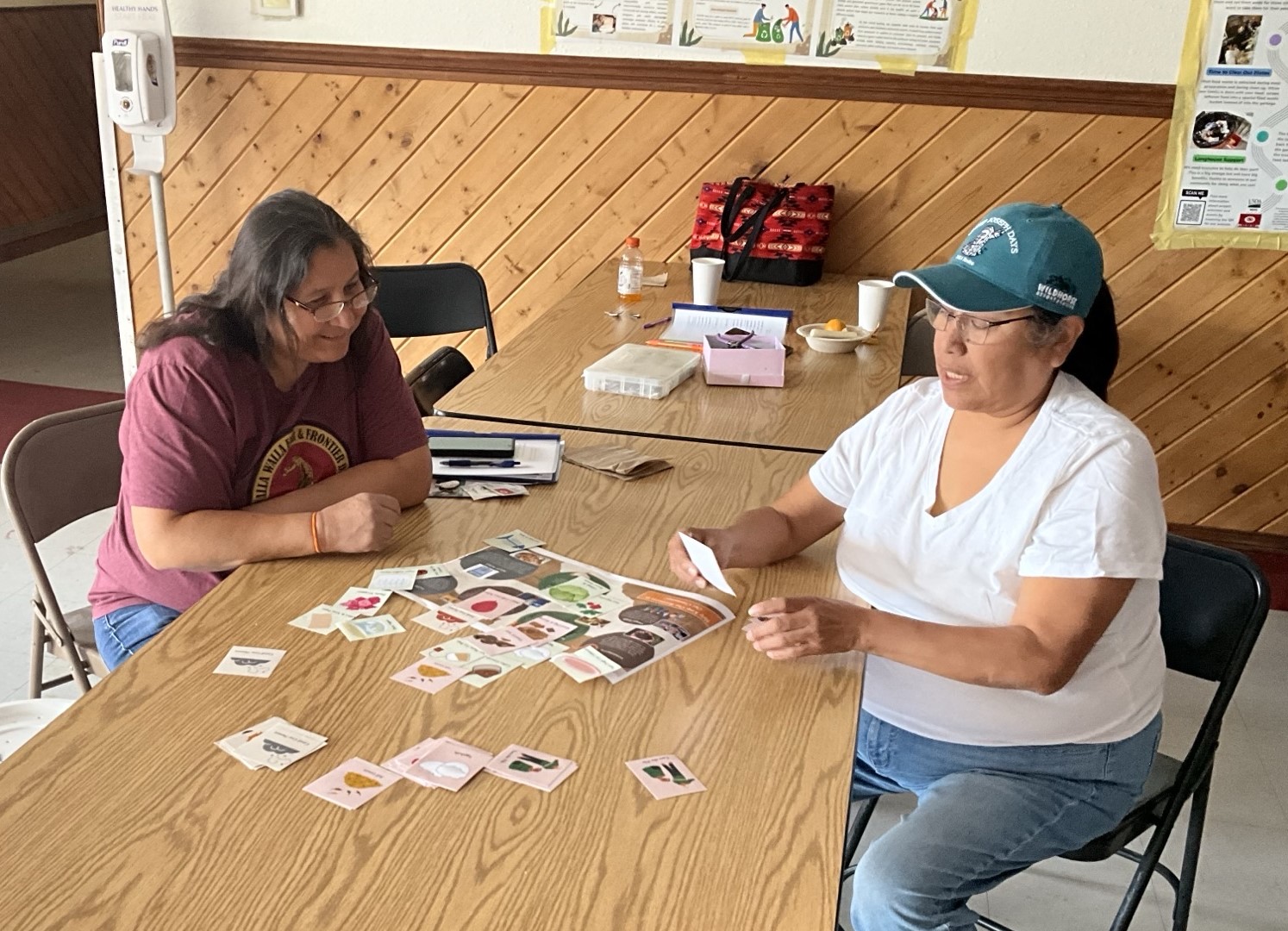
- Resource Recovery Game – interactive learning about different composting and resource recovery avenues.
- Kitchen Food Waste Pathway – flow diagram shows opportunities within the Longhouse kitchen to recovery food waste at different points in the preparation process.
- Microplastics Trifold – connecting to single use plastics, microplastics are becoming more relevant to composting and First Foods efforts.
- Food Waste Reduction Activity Sheet for Kids – this activity sheet was included in our youth passport outreach activity booth.
- Composting Guide Presentation – created by Biowaste Technologies, these slides provide technical guidance on composting for community members.
- How to Vermicompost – created by Biowaste Technologies, these slides provide technical guidance on vermicomposting for community members.
- Intro to Biogas Presentation – these slides were presented as part of the community biogas workshop.
- Importance of Food Waste Management Presentation – created by Biowaste Technologies provides an overview of why our project is focusing on food waste.
- Longhouse Sustainability Pledge and Punch Card program overview – this overview was presented to the CTUIR Board of Trustees as part of the Our Sustainable Future
- Longhouse Food Waste Training Agenda – from the dedicated event on Saturday July 5th 2025, this agenda shows the format of the event.
- NDTIA!P BOT Update and Resolution to Support Presentation – slides from the Friday Oct 25th 2024 presentation to the CTUIR Board of Trustees.
- Resource Recovery Curriculum
- Bokashi: Fermenting Food Waste Into a Valuable Soil Resource
- Composting Guide: Turning Organic Waste into Healthy Soil
- Comprehensive Guide to Bokashi, Hot, Cold, Worm, and Anaerobic Composting
- Food Waste, Emotions, Accountability, and Community Well-being
- Oregon State University Recyclers 101 Notes – Module 2: Food Waste and Composting; and Module 5: Commercial Waste Reduction and Recycling
- Oregon Right to Repair Law (SB1596) Overview
Capacity Development and Policy Needs
This project centered the Tribal community at its heart, and our project activities reflect this prioritization. Lasting behavior change can be difficult to create within a community, however our project was starting from a strong place due to the cultural traditions and household habits within our community before the project began. Our project focused on building expertise within Tribal workforce members as government subcontractors and within the general community through education and engagement activities. This section outlines those efforts in detail.
Workforce Development
Rural and Tribal communities often struggle from issues of extraction, both of cultural knowledge and of capacity development. Many staff of the Tribal government are sourced from outside the community, and spend only a handful of years working in the community before moving on to other job opportunities in larger cities. Due to this, projects suffer from interruptions and delays caused by staff turnover, and over time this reduces the overall capacity of the Tribal government services and community. To confront this, our project deliberately chose to invest time and energy into developing existing foundational knowledge found within the Tribal community, and a project manager from the Tribal community was subcontracted to participate with the project team. Our project was proud to work with Biowaste Technologies LLC and its CTUIR enrolled and Mission resident operator DeArcie Abraham.
As part of the project’s deliverables, Biowaste Technologies was directed to secure previously unobtained materials management, composting, and community engagement certifications, and to provide summary reports on these certifications. These certifications can be found in Appendix C: Contractor Documents, and summary reports in Appendix H: Other Documents. Through the course of the project, Biowaste Technologies was able to secure:
- US Composting Council 40-hour Compost Operations Training Certificate
- Portland State University’s Sustainability and Sustainable Procurement Program
- Tribal Rights Employment Office (TERO) Indian-Owned Business Certification
- Youth Mental Health First Aid from the National Council for Mental Wellbeing
These certifications built capacity within the Tribal community to address materials management, providing both technical knowledge as well as community outreach and education strategies that enhance the ability of Tribal community members to provide services to the Tribal government as project subcontractors. This project also aimed to document the development of our Tribal project manager through reflections offered at the project mid-point and at the end, as well as other with other technical documents our project manager produced. These reflection documents can be found in full in Appendix C: Contractor Documents as well as in Appendix E: Educational Materials, and excerpts are highlighted below:
Project Mid-Point Reflection
“I share the feeling of accomplishment with my community who's engaged so willingly with excitement. That every workshop delivered, every pound of food waste diverted, and every conversation sparked is contributing to long-term change. The journey requires navigating challenges with limited resources, adapting to community needs, and balancing multiple roles. But the momentum continues to build, powered by the commitment to protect the land and honor our responsibilities to future generations.
One of my most valued experiences has been seeing CTUIR programs and community members begin to shift their perspectives. Food waste is no longer seen as trash—it’s being recognized as a resource with real value for our soil, our climate, and our culture. That shift in mindset, especially among youth and elders, is a powerful reminder of why this work matters.”
End of Project Reflection
“Throughout the project, I learned how to build and utilize both bokashi systems and anaerobic digestion buckets. I found that anaerobic digestion, while somewhat time-intensive to construct by hand, is based on a relatively simple concept that can work effectively in indoor environments where temperatures remain warm year-round. The bokashi system proved especially successful. It was easy to implement, produced very little odor, and decomposed rapidly once incorporated into the soil. Bokashi also provides valuable nutrients, particularly phosphorus and potassium, which support healthy leaves and root development. Depending on the ingredients and recipe used, the nutrient profile can be adjusted to meet specific soil and crop needs.
One of the most important lessons I learned through this project is that changing human behavior is often more challenging than implementing the technical aspects of food waste diversion. Food waste is not only an environmental issue; it is also a social and emotional one. Many people experience feelings of guilt, shame, or discomfort when discussing food waste, which can make accountability and behavior change difficult. In many ways, society has adapted to convenience within only one or two generations, making it more challenging to remain conscious of how food scraps and food waste are managed.
At the same time, I observed clear differences among age groups. Children were often enthusiastic participants who quickly adopted new habits and eagerly engaged in food waste diversion activities. Elders frequently connected the project to traditional teachings and practices, making composting and waste reduction feel familiar and natural. Many shared stories and experiences reflected values of conservation, sharing, and resourcefulness. Middle-aged adults often expressed interest in the project but tended to balance those interests with the demands and conveniences of a fast-paced modern lifestyle. These observations reinforced the importance of tailoring education and outreach efforts to different audiences while recognizing the strengths each generation brings to environmental stewardship and food waste reduction efforts.”
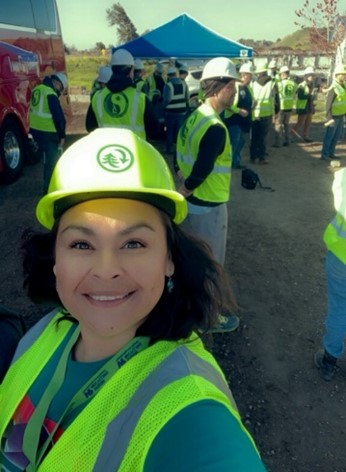
: DeArcie takes a selfie during her time at the U.S. Composting Council training in Sonoma County, California (May 2024).
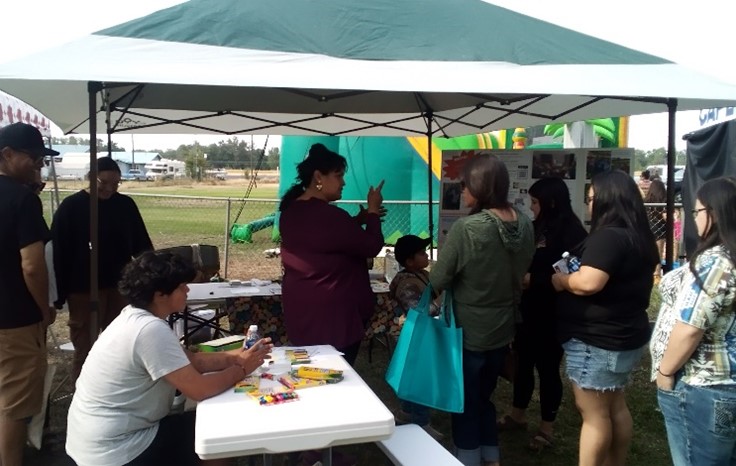
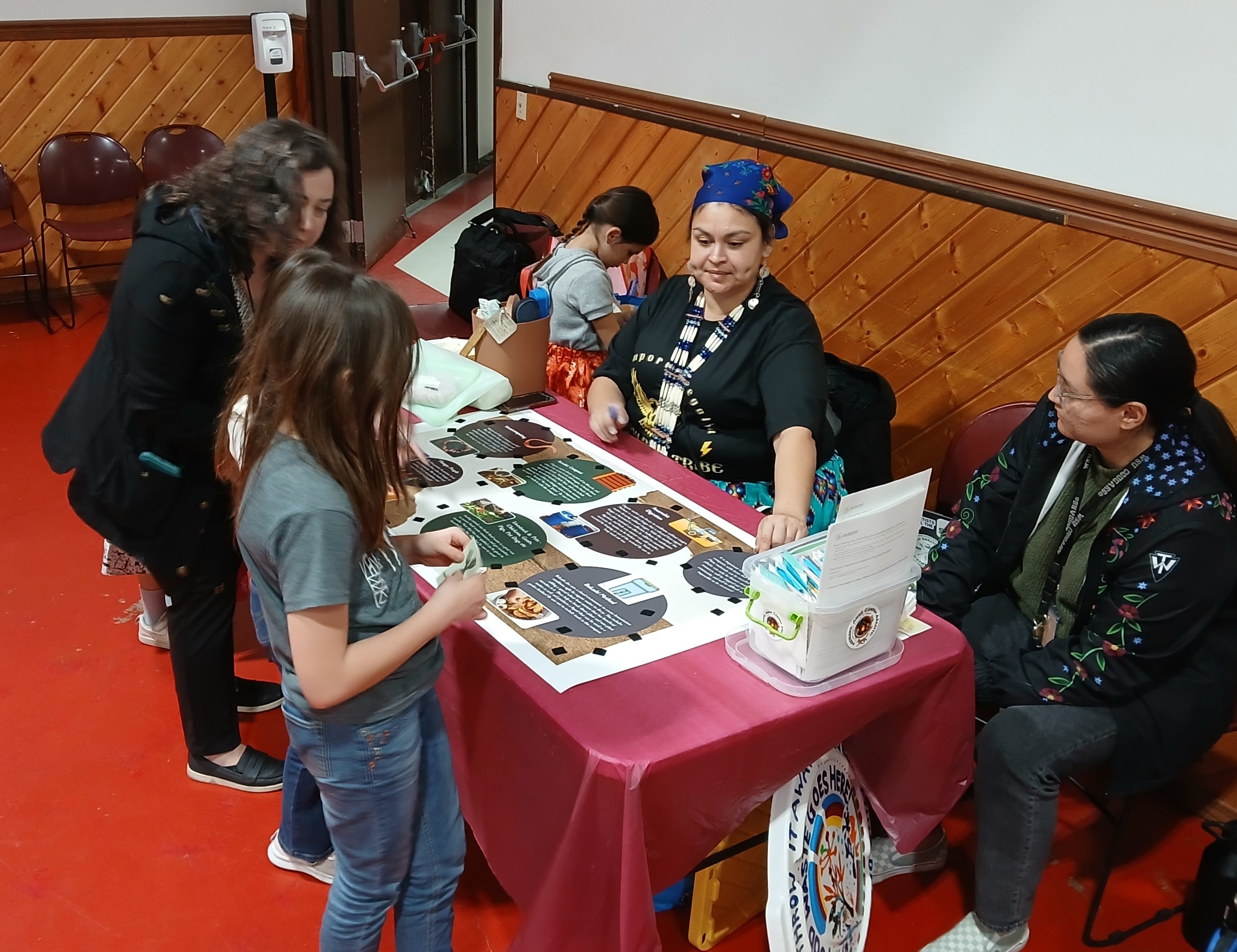
Attendees at the 2024 CTUIR Community Picnic talk with DeArcie about food waste and participate in survey questions about food waste knowledge and behaviors.
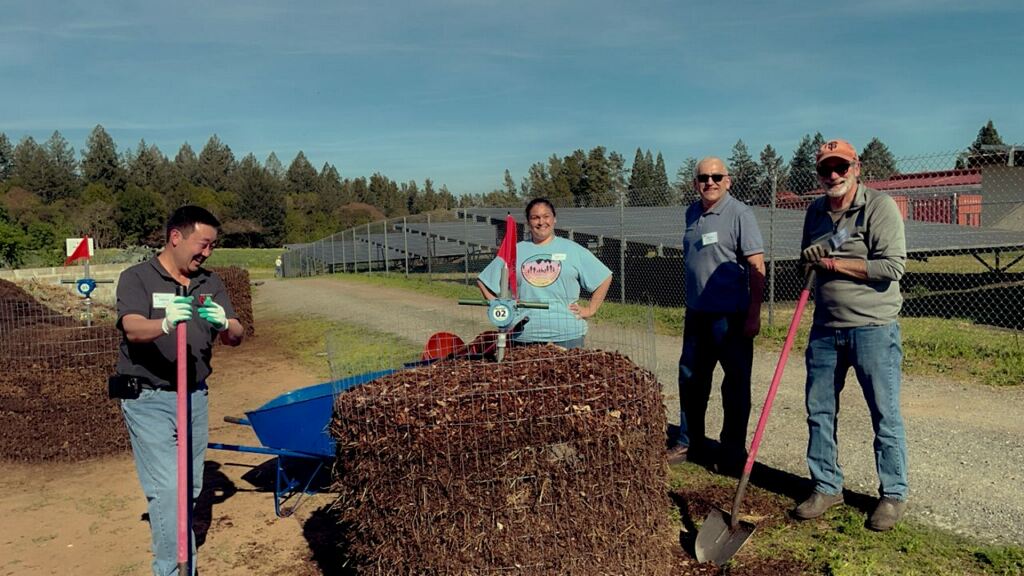
Tribal entrepreneur DeArcie Abraham (center) grins while among her fellow trainees at the U.S. Composting Council training in Sonoma County, California (May 2024).
Biowaste Technology has been working with the Tribal community for many years, and collaborated with First Foods Policy Program on this presentation as part of the Climate Resilience Listening Sessions on Oct 5th and 6th 2023.
Community Education
Knowledge and capacity isn’t kept with just one person; it requires participation from all corners of our community. For a community scale organics recovery operation to be successful, it will require a critical mass of community members with a firm understanding of why food waste management is important and skills necessary to implement food waste prevention and diversion. To build this capacity within the community, our project offered robust education and engagement activities to begin to instill these skills within our community.
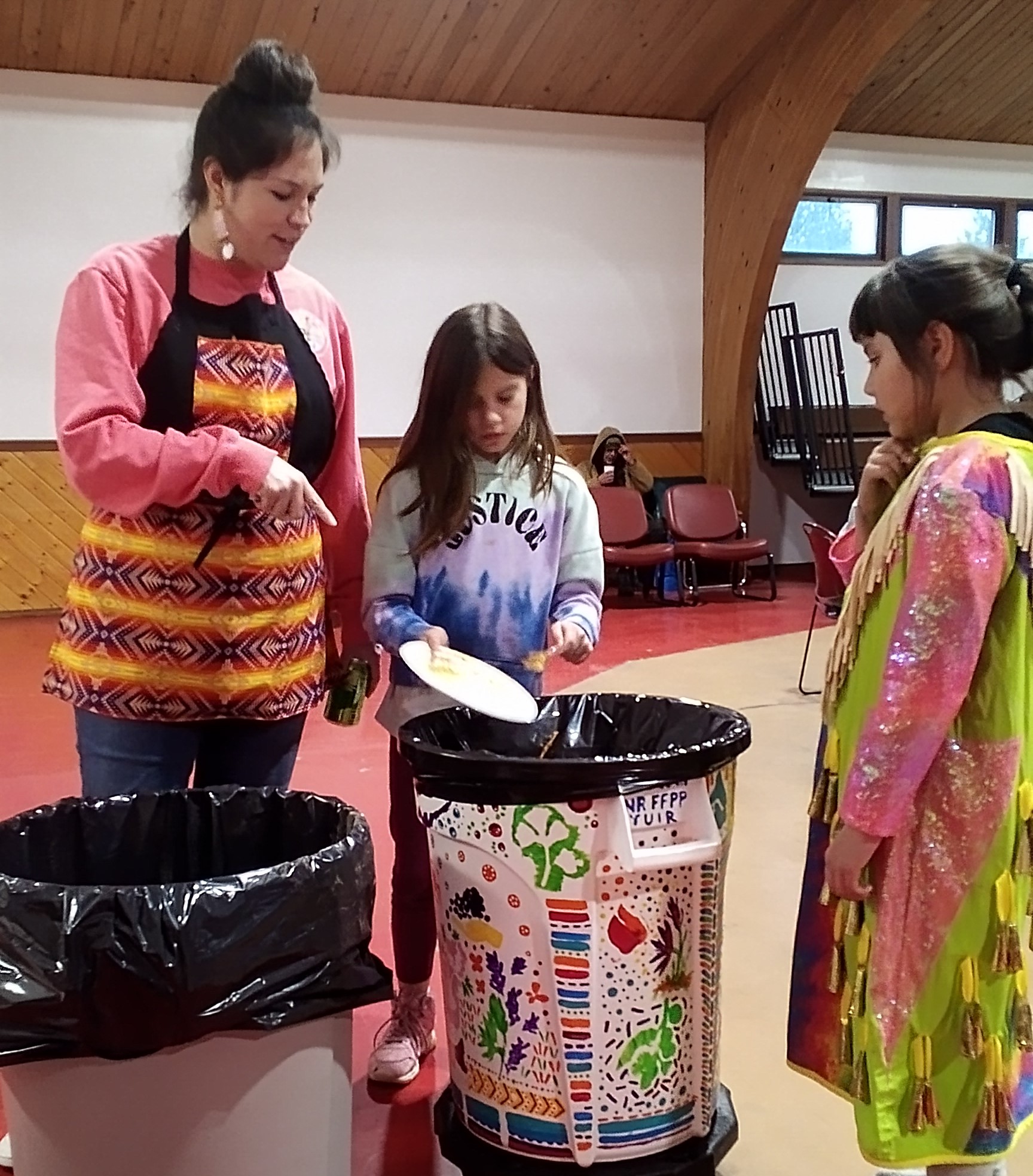
To do this, our project hosted dedicated trainings to promote food waste diversion skills and identify potential barriers that community members feel would be a challenge for their success. Our project also offered booth activities during community events including with Longhouse Feasts, Culture Night activities, and other regularly occurring events happening within our community. Data on food waste perception collected at these events is found in Part 2 of this report, and uniquely developed educational materials produced as part this project can be found in Appendix E: Educational Materials Produced. The following section is an overview of the types of engagement offered to the Tribal community throughout this project.
Project Hosted Workshops
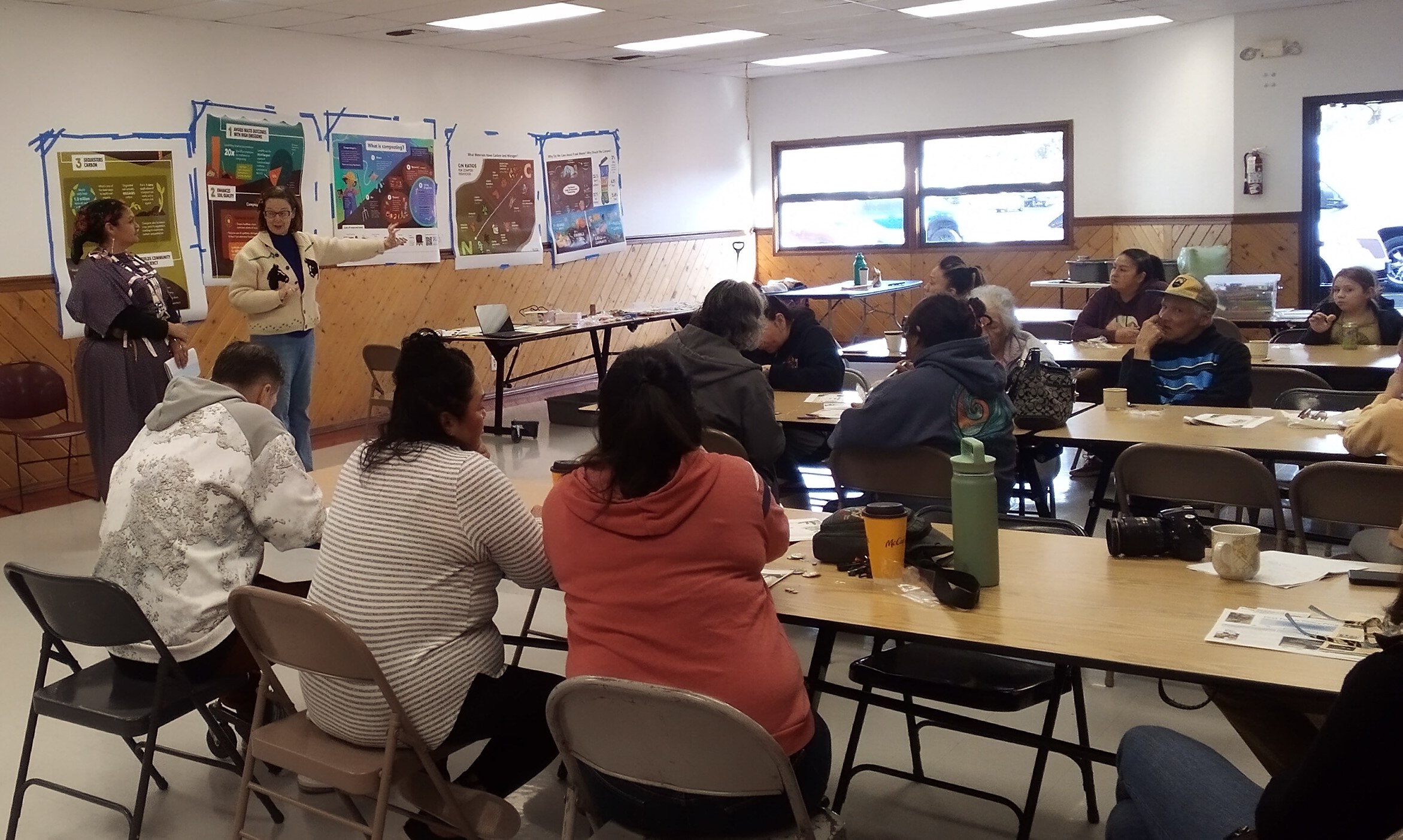
Typically hosted at the Nixyáawii /Mission Longhouse, these dedicated workshops were aimed at those who provide food service to our Tribal entities, including those who cook for ceremonial Feast events and staff who perform food service professionally. These events often included educational posters and associated “scavenger hunt” activities for raffle prizes, meal preparation designed to perform food waste diversion in real time, and educational games that guide participants through skill building exercises. These hands-on activities were followed by group discussions about participant experiences and potential barriers and opportunities. Typically these events included pre- and post-event knowledge gains assessments to gauge effectiveness of the lessons being conducted.
Culture Night Youth Activities
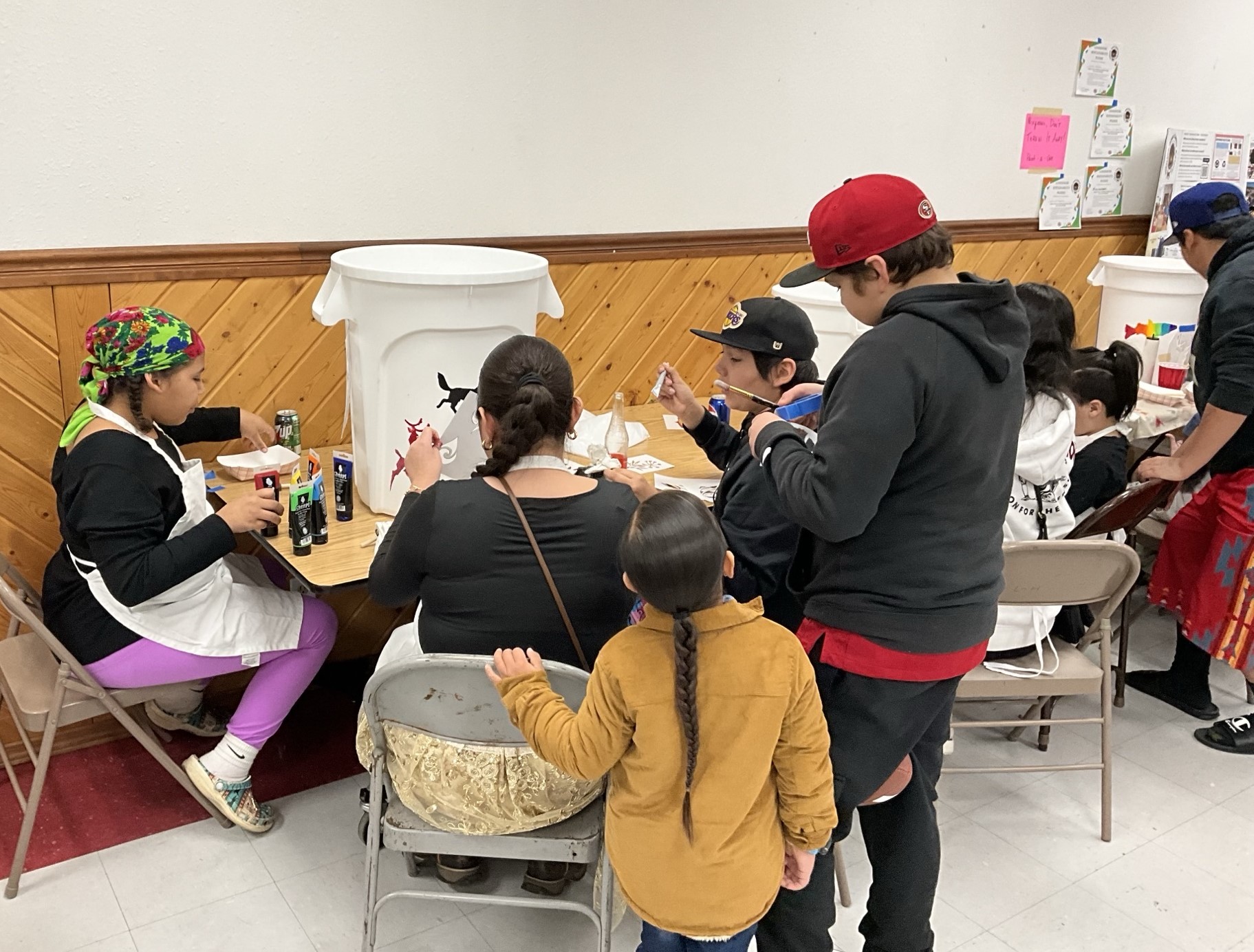
Project partners provided other opportunities for us to instill resource recovery skills within the community through engaging with youth and families during the Family Engagement Program’s weekly Culture Nights. In addition to conducting food waste diversion with the meals prepared as part of this program, our project team offered a weekly educational booth and youth “passport” initiative that focused on recycling, composting, and earth science related to materials management. Youth learned to visit this educational booth to participate in the weekly educational activity and earn a stamp for that activity. With 5 stamps, youth could pick from a variety of fun and functional prizes as an incentive to continue their engagement with the project booth. In the End of Project Survey that was conducted, many participants noted their positive experiences with this booth in their responses.
Tribal and Federal Policy
Policy is another aspect of our community that this project chose to address. Policy can often create intended and unintended barriers to implementing the kinds of behavior change. This project committed to documenting policy challenges it experienced so it could relay those challenges to future Organics Recovery Needs Assessments and operations implementation. Reporting on specific policies that hindered the project’s implementation can be found in the USDA CFWR Project Indicator reporting for the project and is included in Appendix H: Other Documents.
Policy challenges included permitting for the Resource Recovery Center because it would be sited on Tribal Trust land and was over the size restriction for structures not requiring permitting. Presentations on project shed design and intended activities were conducted to a number of Tribal Commissions that regulate land use and development for the reservation, and a permit with the Tribal Planning was completed and filed, and following a resolution of support by the CTUIR Board of Trustees in [late 2024], the project shed that became the Resource Recovery Center was purchased and installed in January 2025. The BOT resolution for the project shed installation can be found in Appendix G: BOT Resolutions.
This material is based upon work supported by the U.S. Department of Agriculture, under agreement number 2024-70510-41990.
Any opinions, findings, conclusions, or recommendations expressed in this publication are those of the author(s) and do not necessarily reflect the views of the U.S. Department of Agriculture. In addition, any reference to specific brands or types of products or services does not constitute or imply an endorsement by the U.S. Department of Agriculture for those products or services.
USDA is an equal opportunity provider, employer, and lender.
Webpage updated: Oct 15 2026